

We’re now seeing the first attorney analysis come online about the independent-contractor rule that New Jersey adopted on Tuesday. The Littler law firm posted this article, and Troutman, Pepper, Locke posted this piece.
In a nutshell, these attorneys are saying publicly what I have heard other attorneys say privately the past couple days: What the administration of Governor Mikie Sherrill just did is an improvement compared to what the administration of Governor Phil Murphy originally proposed, but the root of the policy problem remains the same, and the State of New Jersey is nowhere near good policy for independent contractors or the broader business community.

One lawyer I spoke with made an analogy that I think is easy for anyone to understand. He asked me to imagine a dog-walking service that said there was a 90% chance they would kill my dog.
“You wouldn’t hire that dog walker, right?”
Then he asked me to imagine the service said, “Hey, good news, we made changes and now there’s only a 25% chance we’ll kill your dog.”
You still wouldn’t hire that dog walker, right?
Nobody would. We would all take our business elsewhere to protect the dog.

This is akin to the position of companies trying to work with independent contractors in New Jersey based on this rulemaking, the attorney told me. What the Sherrill administration adopted may be incrementally better than what the Murphy administration originally proposed, he said, but there is still too big of a risk that a company will be accused of employee misclassification and then be forced to pay significant fines for working with independent contractors.
The most predictable outcome, he added, is companies walking away from the independent contracting model to protect their business—which would in turn mean a loss of income and careers for all kinds of self-employed people when the rule takes effect on October 1.
A Real Stunner
In a fascinating turn of events this week, even some of the people who usually disagree with our side in this policy battle are now singing from our hymnal.
The New York-based Freelancers Union, you may recall, is the organization that joined forces with the AFL-CIO and the Democratic Socialists of America about five years ago to try and convince us all that California-style ABC Test regulatory language in federal legislation would be great for independent contractors nationwide. We all disagreed strongly, having seen the horrible outcome in California. And we said things would only keep getting worse with this ABC Test language that unionists are finagling and reinterpreting all across the country to hurt independent contractors.
Well, now, lo and behold, here is what the representative of the Freelancers Union told WPIX this week about New Jersey’s newly adopted ABC Test rulemaking:
“I just want to say to freelancers across the state that we have their back, we’re fighting for them,” said Andrea Gordillo, Chief of Staff at Freelancers Union, a non-profit group.
Gordillo says the rules, as written, don’t surgically target exploitative misclassification and instead make broad sweeps and threaten freelance work.
“The problem isn’t freelancing, it’s forced freelancing,” said Gordillo, “and we want to stamp out one, but not both.”
Yes, you read that correctly. Even the people who stood shoulder-to-shoulder with socialists while all of the rest of us fought for entrepreneurism are now saying New Jersey just went too far with ABC Test regulatory language.
They are, in fact, echoing exactly what I testified last year before the U.S. Senate HELP Committee:
“This is not targeting employee misclassification. This is weaponizing regulatory language to attack independent contractors.”
It’s almost as if independent contractors like me have been right all along.
Which, also astonishingly, is what the Sherrill administration just admitted in this newly adopted rule.
At Last, One Truth Comes Out
Reading through the Sherrill administration’s 200-plus-page adopted rule can feel like a slog. But boy, was there one bit that I stopped and read a few times because I couldn’t believe what I was seeing.
It’s on pages 90 and 91, and it’s about what happened here in New Jersey back in 2019, when a slew of us independent contractors descended upon the State House to stop lawmakers from passing Senate Bill 4204. We said again and again that S4204 was an attempt to copy California’s disastrous Assembly Bill 5 that threw all kinds of independent contractors out of work. As the New Jersey Chamber of Commerce noted at the time, there were so many of us at S4204’s public hearing in Trenton that our testimony:
“… used up about four hours of a six-hour hearing intended to examine 10 proposed pieces of legislation.”
We were told, again and again, that we were all just confused. That New Jersey S4204 wasn’t trying to copy California’s AB5 at all. That we women were being hysterical.
The head of the New Jersey AFL-CIO, Charles Wowkanech, insisted that passing S4204 would be a good thing. Then-Senate President Steve Sweeney, also a longtime unionist himself, went out of his way to tell the press that New Jersey’s S4204 was different from California’s AB5.
In fact, Sweeney went so far as to write an op-ed that compared us to Russian disinformation agents for even suggesting that the opposite might be true. He called out this op-ed that I wrote in The Washington Post, where I noted the New Jersey bill was “a version of California’s recently passed law.”
Fast forward to this week. According to the rule that the Sherrill administration just adopted, what happened in 2019 was indeed New Jersey’s Democratic Party leadership and AFL-CIO leadership gaslighting us all.
Pages 90 and 91 of the newly adopted rule state:
“As to the 2019 New Jersey bill (S4204), as introduced, it would have altered New Jersey’s statutory ABC test in ways that made it virtually identical to the ABC test in California AB5.”
It took the better part of a decade, but the truth is finally right there in black and white.
As this freelance-busting battle rages on in New Jersey, I urge you to remember who told the truth, and who lied, as you consider the newly adopted rule’s claim that it “has nothing whatsoever to do with either California AB5 or S4204.”
Remember who told the truth, and who lied, as we all get into debate anew about what this newly adopted independent-contractor rule actually is.
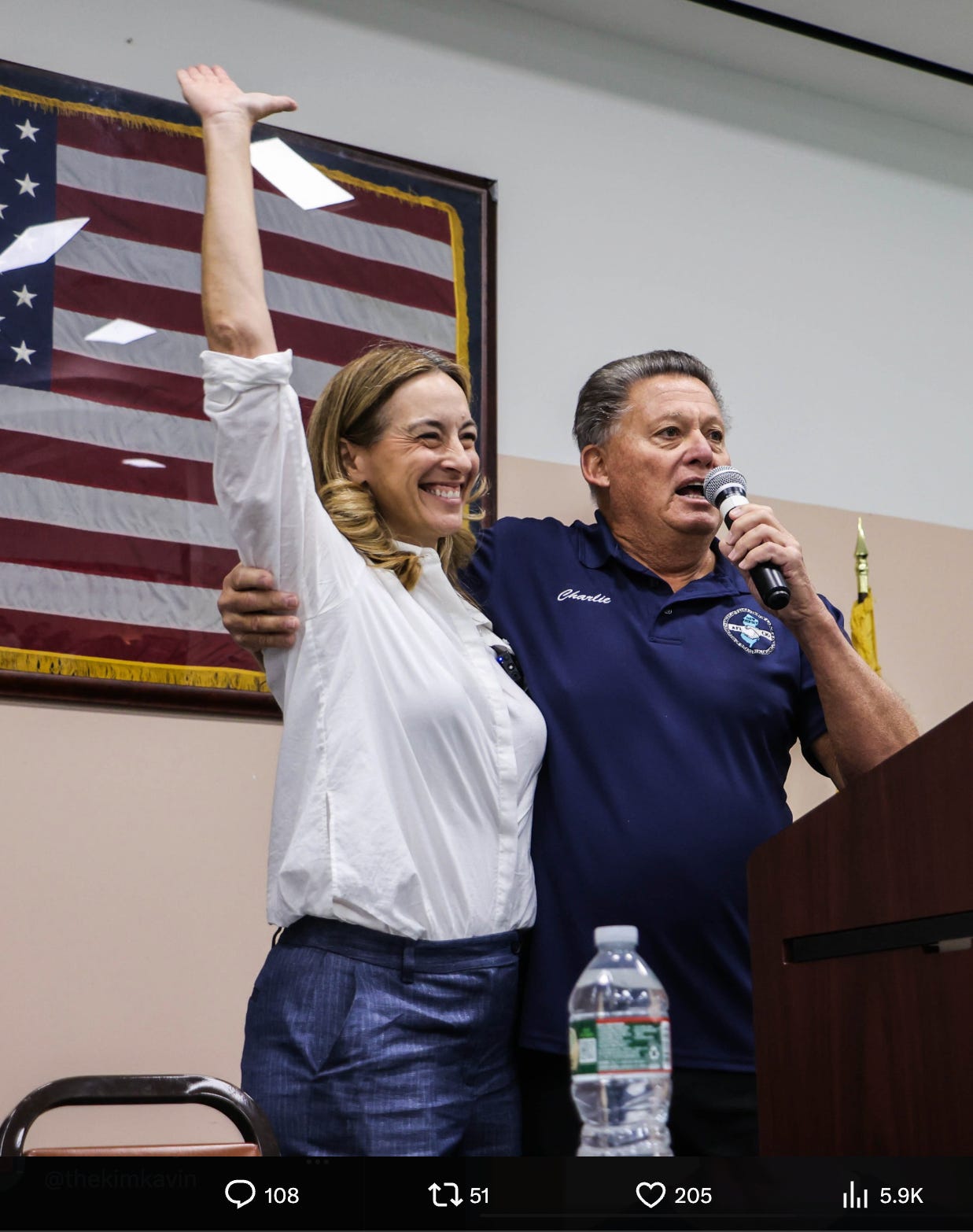
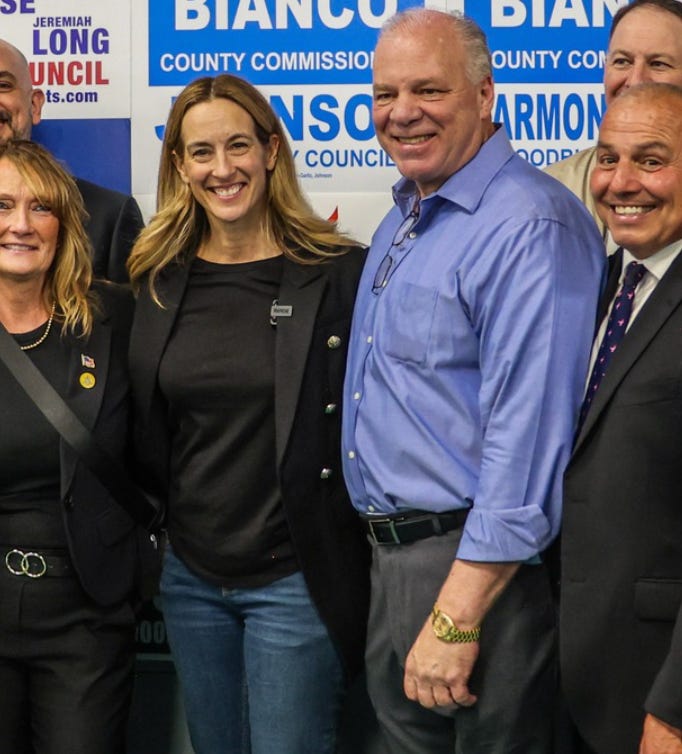
And while you’re at it, remember who helped get Governor Sherrill elected.
‘Not Obligated’
Numerous written comments that were part of the 99% public opposition to this rulemaking called out the following section of the original proposal. This section, shown below in its entirety, represented the New Jersey Labor Department’s effort to determine the jobs impact of this rulemaking.
Public comments said that writing these 16 words was akin to making no effort at all to provide a proper impact analysis:

The Sherrill administration responded to those pubic comments by stating in the adopted rule:
“The Department is not obligated to address economic research on the impact of ‘the ABC test…’”
Yup. That’s really what the adopted rule says. The state isn’t obligated to care about economic research that lays out the effects of this regulatory language.
And what a convenient position that is for the Sherrill administration to take, given that in one of the public comments, economists from the Mercatus Center presented new research that shows New Jersey’s use of the ABC Test has already led to harmful effects compared to states that do things differently:
a 3.81% decrease in W-2 employment
a 10.08% decrease in self-employment
a 3.95% decrease in overall employment
That public comment also noted that “the New Jersey data reveals stark gender disparities: women’s traditional W-2 employment declined by 7.40%, while men’s showed no significant change—raising concerns about disproportionate impacts on women following the policy change. This pattern suggests the policy may inadvertently create gender-specific barriers in the labor market while failing to deliver its promised worker protections.”
All good, apparently. Let the women struggle. There’s no obligation to discuss it at all.
‘Not Relevant’
Also notable in this newly adopted rule is the Sherrill administration’s response to those of us who pointed out that a startling amount of the data and information the Murphy administration used to get New Jersey to this point with independent-contractor policymaking is mischaracterized, highly questionable and strongly deserving of a full inquest to figure out what the heck actually happened.
Several of us referred specifically in our public comments to a document that the Labor Department itself—in its press release announcing the proposed rulemaking—highlighted with a link as being a key element underpinning all this policymaking. That document was the 2019 Report of Governor Murphy’s Task Force on Misclassification, which the Labor Department calls “comprehensive” in that press release—but whose data is mischaracterized beginning in the very first paragraph.
Here’s how the Sherrill administration responded to the public comments taking issue with the premise, participants, substance, accuracy of related press releases, and transparency of the process that resulted in the report being issued:
“The commenter’s critique of the work of 2019 Misclassification Task Force Report is not relevant to this rulemaking.”
That’s right. The Labor Department said this information was relevant and comprehensive when it proposed the independent-contractor rule, but now says the same information is not relevant as the rule is being adopted.
Again, a convenient position to take when the information we’re all talking about is wholly indefensible.
See You (Yet Again) on Monday
What’s most clear to me in the pages of New Jersey’s adopted rule is that the Sherrill administration is taking the position that truth and economic consequences are irrelevant when it comes to independent-contractor policymaking. The data underpinning this policy is highly questionable, and economists say people are already getting hurt, but the administration is simply not going to discuss such things.
This situation should be deeply disturbing to everyone, no matter what the lawyers and legislators and partisans and pontificators all end up saying as this policy battle continues to play out between now and October 1, when the rule is scheduled to go into effect.
The New Jersey Legislature should take action before then to stop it.
Last night, the state Senate Labor Committee announced online that at a hearing has been scheduled for 10:30 a.m. Monday: “The committee will receive testimony from the public concerning the Department of Labor and Workforce Development’s recently adopted regulations codifying the department’s interpretation of the ABC test for independent contractor status.”
I guess it’s not enough that we all showed up to pack a conference room standing room only with 3-to-1 opposition at the public hearing last summer, or that we all took the time to write thousands of public comments demonstrating 99% public opposition to the rulemaking, or that key lawmakers have at their fingertips this 98-page report based on those public comments that I personally took the time to compile and send to them with clear lists of key findings and recommendations.
Nope. We all now have to take yet another day off work, pay the sitter, and schlep down to Trenton to argue yet again in front of the cameras about this freelance-busting insanity.
We’re all going to see a lot of information and disinformation in the press and on social media about what this rulemaking actually does. We’re going to hear all kinds of competing arguments in the days, weeks and months to come. It’s going to get geeky and weedy.
That’s OK. You don’t have to be a labor-policy expert to know in your bones what’s happening here. All you have to do is remember these three things:
Which side has been telling the truth, and which side has been spewing lies for the better part of a decade now?
Which side figured out the real-world economic impact and sounded the alarm about harm that’s already occurring in New Jersey, and which side said they’re not obligated to even think about that research?
Which side sniffed out the fact that the data underpinning this entire kind of policymaking is highly questionable at best, and which side said those findings are irrelevant?
And then ask yourself this: Would you trust the people who wrote this independent-contractor rule enough to walk your dog?
See you all in Trenton on Monday morning.