

Let’s start with something good. Three fist-pumping, full-throated cheers for The Washington Post Editorial Board, whose coverage of last week’s federal independent-contractor rule proposal included this:
“Advocates for classifying more self-employed workers as employees are generally speaking on behalf of people who don’t want their help. Of the estimated 11.9 million Americans for whom independent contract work is their sole or main job, 80 percent prefer it to traditional employment, according to a 2023 survey from the Bureau of Labor Statistics.
“‘Gig economy’ workers, such as Uber or DoorDash drivers, dominate in the public imagination of what an independent contractor looks like. But that’s the minority. The industries or occupations in which independent contracting is most common include real estate, construction, arts, design and personal care. If someone does not want to be an independent contractor, there’s nothing stopping them from seeking full-time employment.”
Amen and hallelujah!
All kinds of independent contractors, and our defenders, have been making these same points for years—and especially trying to get lawmakers and press to understand that “independent contractor” is not a synonym for “Uber driver.”
The Washington Post Editorial Board clearly gets it. But frustratingly, last week’s coverage about the federal rule proposal also demonstrated that we still have a lot of work to do on the educational front, including with some other major media outlets that keep framing this policy issue around Uber and Lyft.
Here’s how Bloomberg Law framed the news with photography:
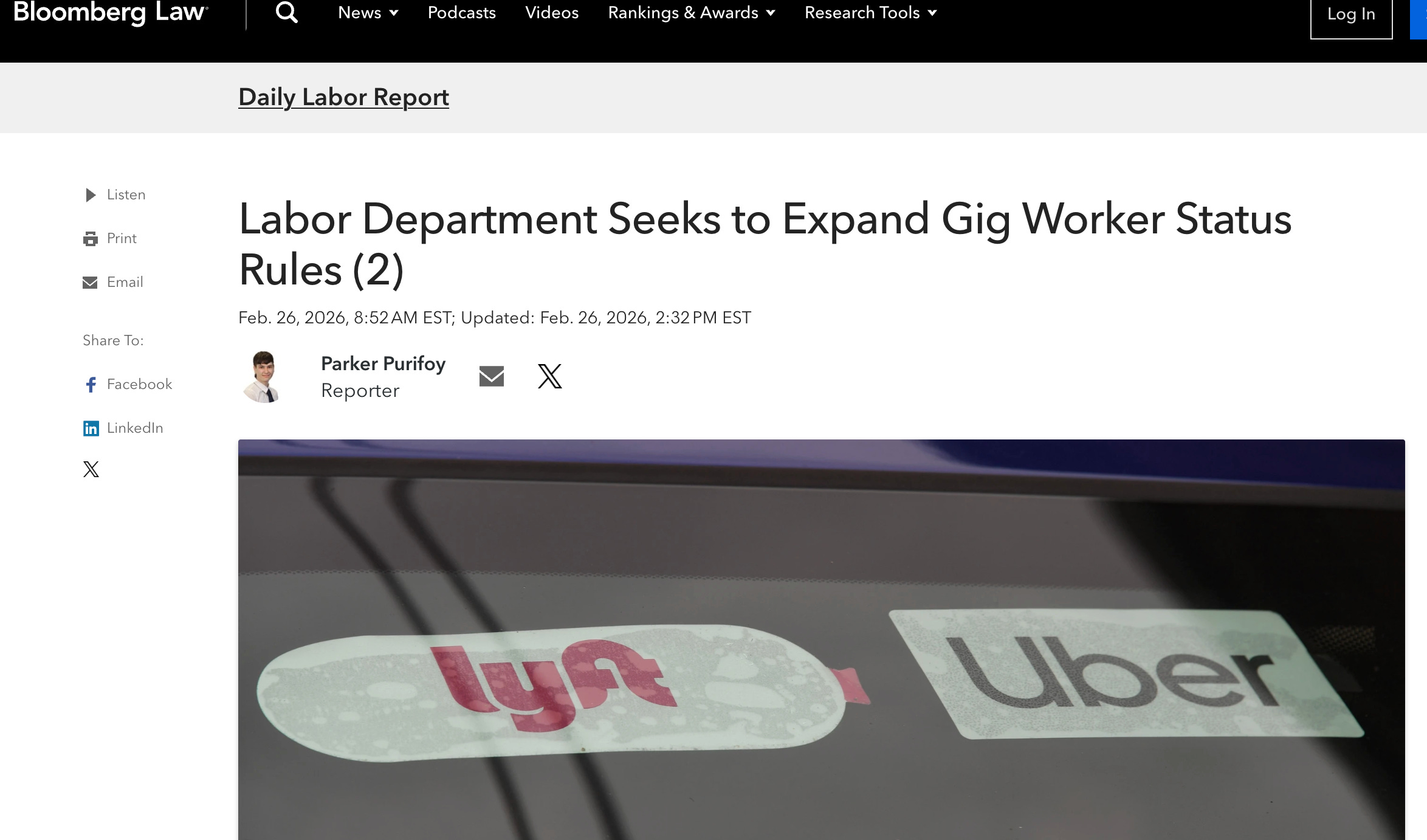
That story’s words also focused largely on app-based work, and suggested that making life easier for government investigators—not protecting everyone’s freedom to be our own bosses—was the core issue at play:
“Gig companies would have an easier time classifying workers as independent contractors under a new US Department of Labor proposal that seeks to expand a business-friendly standard from the first Trump era. …
“Regulatory attempts across administrations have drawn multiple lawsuits to block changes to a measure that would affect DOL investigations of industries such as construction and trucking, as well as app-based gig giants like Uber Technologies Inc. and Lyft Inc.”
The Wall Street Journal took a similarly misleading approach with its visual choice:
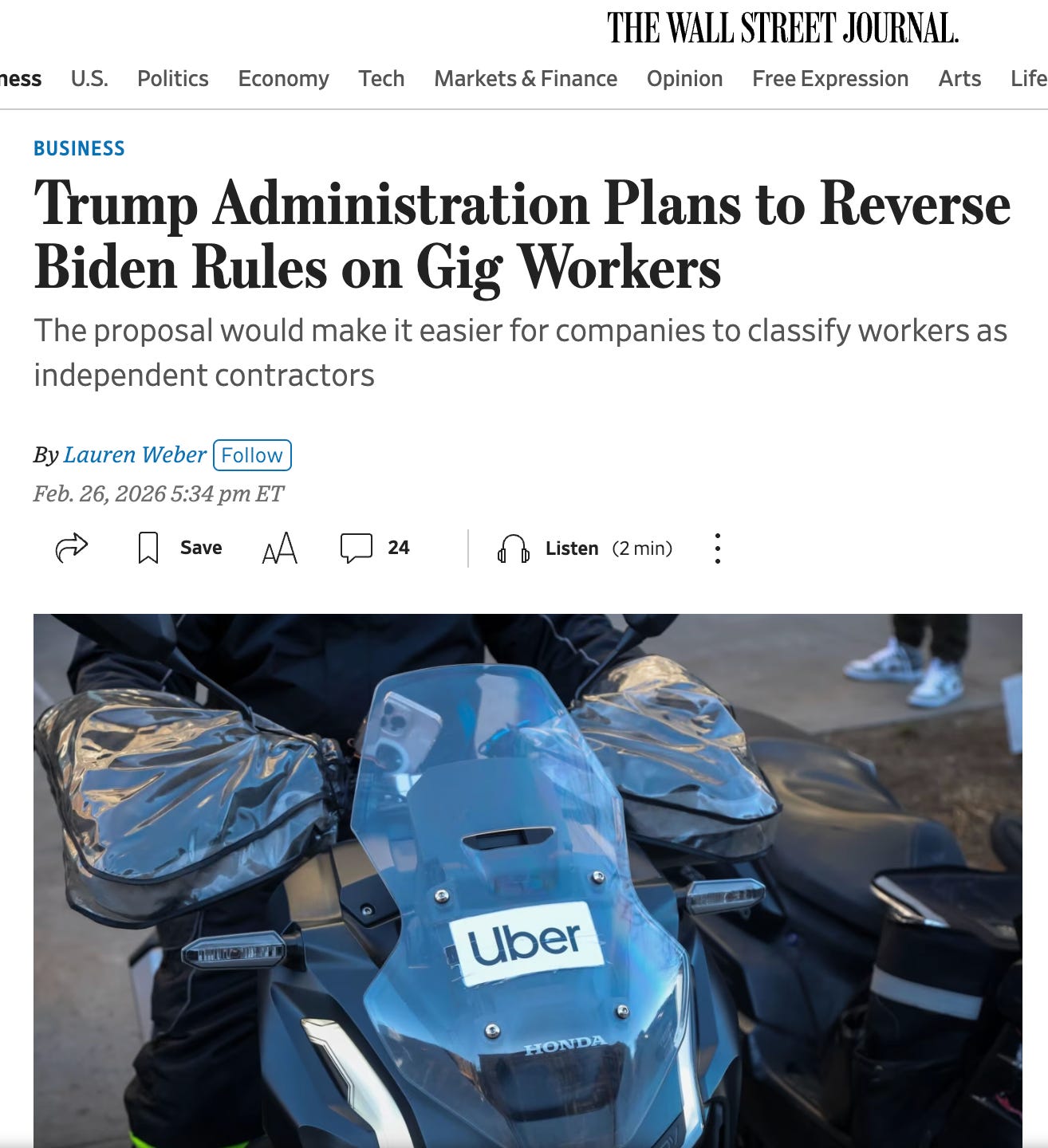
And that story’s words, as well, pushed the Uber narrative hard:
“The Labor Department proposed a rule to make it easier for employers to classify their workers as independent contractors, the latest salvo in a long-running tug of war between Democrats and Republicans over the status of gig workers. …
“The business models of companies such as Uber and DoorDash rely on regulations allowing them to maintain an arm’s length relationship with their workers.”
It’s been years now of independent contractors having to battle this false belief that we’re all a bunch of Uber drivers. Economist Liya Palagashvili called out this “gig economy” myth in 2023. I most recently wrote about the misleading Uber media narrative a month ago. Karen Anderson, the founder of Freelancers Against AB5 in California, compiled a list of more than 600 professions that freelance-busting legislation hit in that state.
Republican Congressman Kevin Kiley of California even read that list of affected professions on the floor of the U.S. House of Representatives. It took him a solid 10 minutes to get through them all, even speaking at a fast pace:
And yet, here we are, with some big media brands continuing to mislead readers about what’s really at stake with independent-contractor policy.
And Then, There Was This
Arguably the worst offender when it came to misleading readers last week was Politico. For years now, most Americans and app-based workers themselves have said their classification as independent contractors is correct. This fact has long been documented by respected organizations with no dog in the fight, such as Pew Research, as well as by industry-backed research.
And yet, Politico’s team framed the situation as some kind of newfound mass-messaging victory at the hands of corporate marketers:
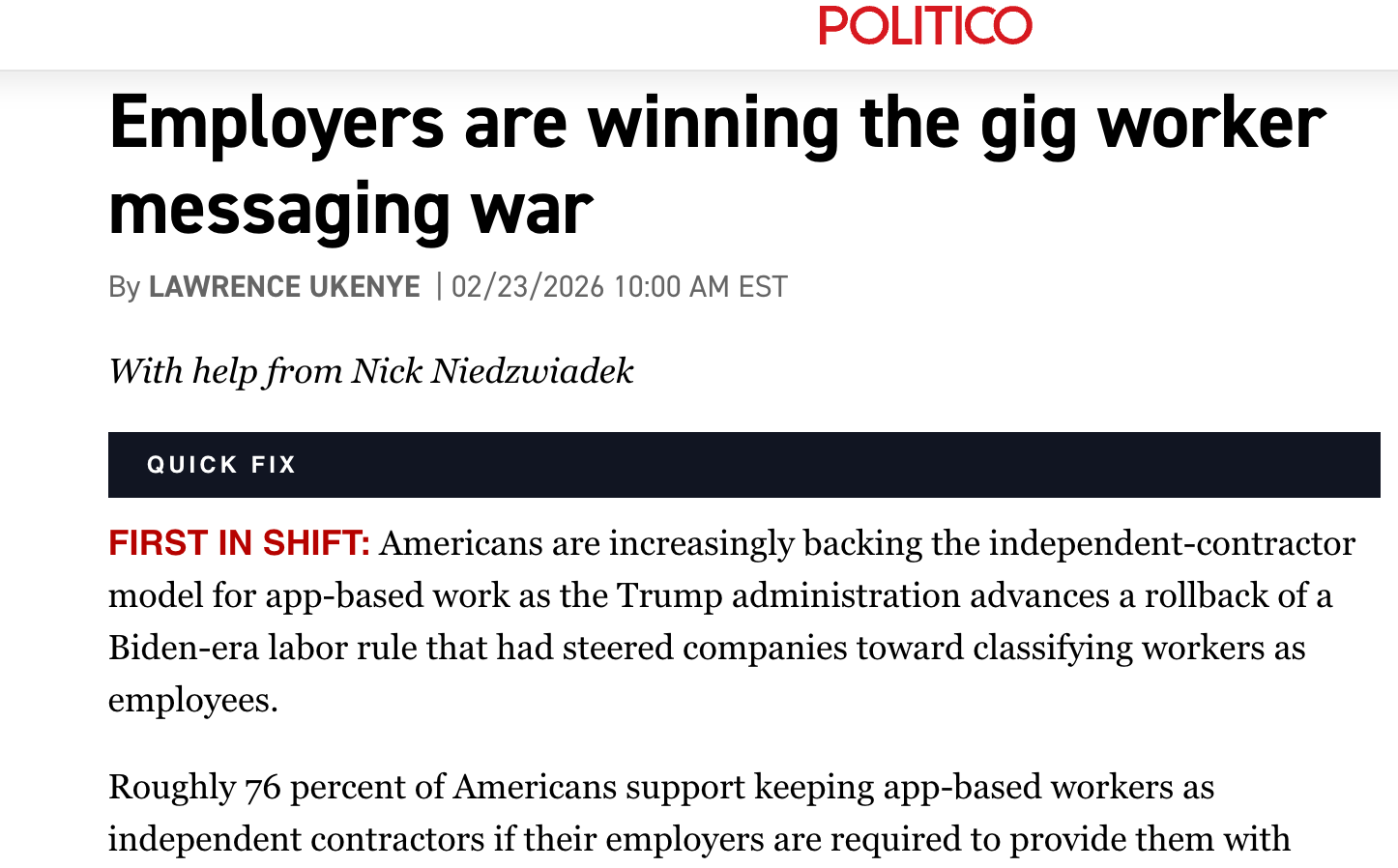
I was pleased to see the Competitive Enterprise Institute call out this misleading narrative frame, writing this:
“The Politico report framed the results as part of a public relations war, describing the results as ‘a sign that gig employers are currently winning the messaging battle over how app-based workers are classified.’
“That’s one way of looking at it. Another is that the gig economy workers themselves are the catalyst here. After all, the polls show that app-based workers are more likely to support independent contractor status (88 percent), than the general public (76 percent), which includes people outside of the gig economy.
“In short, the support for app-based workers retaining independent contractor status declines only when you include people who don’t do it themselves. App-based workers want their freedom. Perhaps we should listen to them first?”
Heck yes, we should listen to them—and to the millions independent contractors who do things other than app-based work, too.
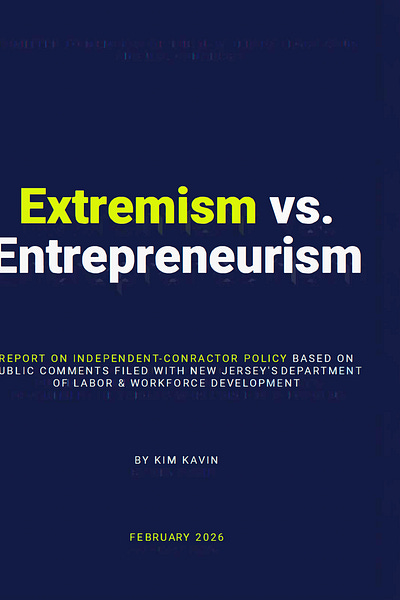
As I just detailed in my 98-page report “Extremism vs. Entrepreneurism,” New Jersey’s Department of Labor & Workforce Development received an estimated 9,500 written comments about its proposed independent-contractor rule, which attorneys say poses an existential threat to independent work of all kinds. Only about two dozen comments—not even a full 1%—supported the idea, and almost none of those comments came from independent contractors.
Indeed, almost all the independent contractors who submitted public comments in New Jersey opposed restricting the freedom to be self-employed.
I noted in the report:
“[P]ublic comments make clear that the ultimate proposed rule in fact threatened the livelihoods of nearly all kinds of independent contractors, including attorneys, investment advisers, insurance producers, owner-operator truckers, licensed therapists, journalists and more.”
And yes, to echo what the Competitive Enterprise Institute published last week: New Jersey’s public comments make clear that independent contractors want our freedom. Lawmakers and policymakers should listen to us and rescind the state’s independent-contractor rule proposal.
I encourage everyone to share this new report with lawmakers and media all across the country, since it puts what’s happening in my home state into national and historical context. It details not only who is arguing against independent contracting, but also how extreme those arguments have become:
This policy issue isn’t primarily about Uber, no matter how many media outlets try to frame it that way. It’s about us all, and about whether we are going to allow our government to restrict our freedom to be entrepreneurial.
I sincerely hope to see media coverage—and policymaking—that is more reflective of this reality in the future.