

In 2018, U.S. Representatives Mark DeSaulnier of California, Mark Pocan of Wisconsin, Donald Norcross of New Jersey and Debbie Dingell of Michigan issued a report called “The Future of Work Wages & Labor.” They held a press conference alongside Richard Trumka, then-president of the AFL-CIO, to discuss the 44-page report’s policy recommendations.
These weren’t run-of-the-mill recommendations. They were designed to change laws and regulations in ways that would help grow unions, including one way the authors themselves described as “admittedly radically different.”
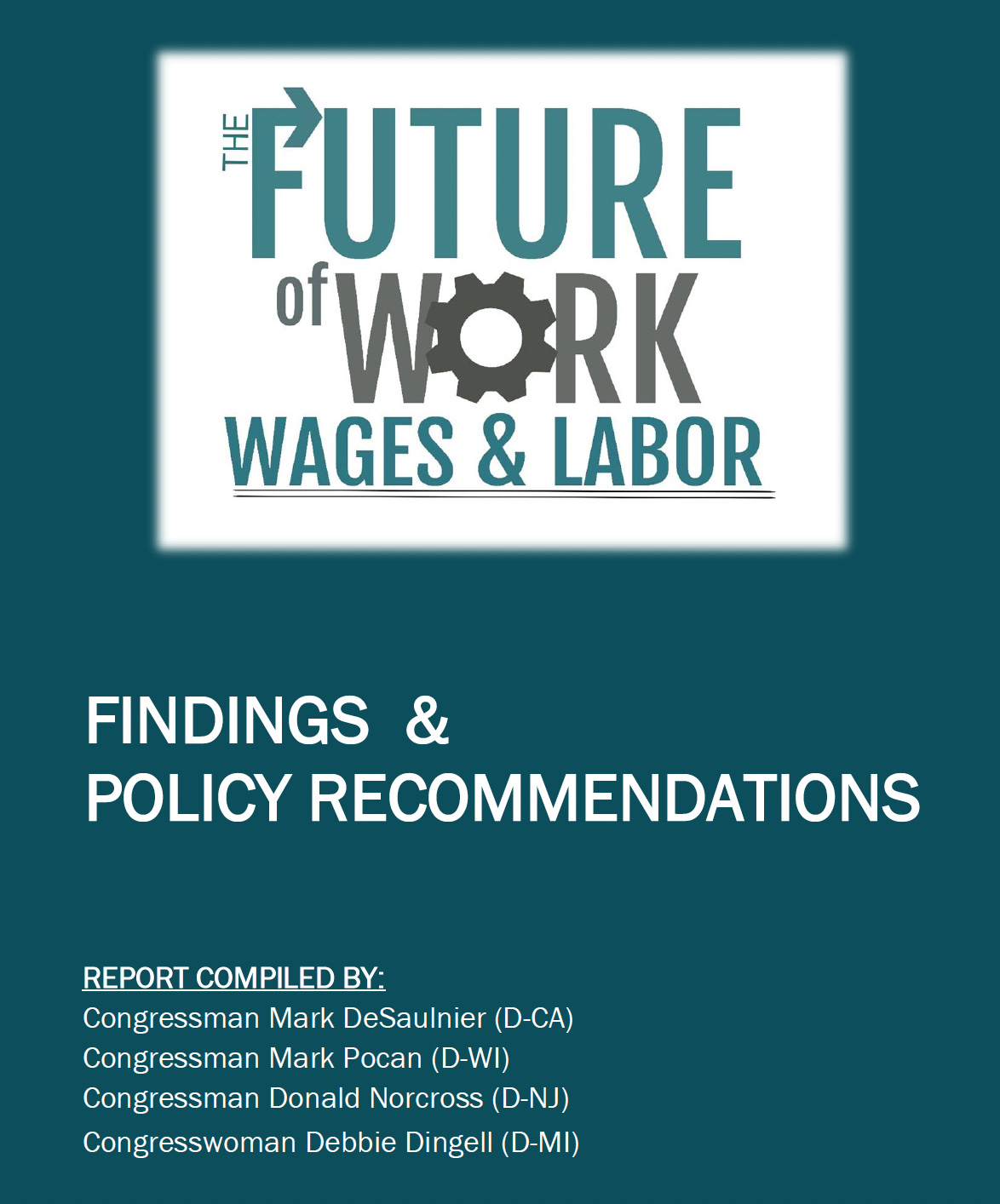
And this report named all kinds of people involved with the effort. It included pages’ worth of names, more than 100 in all. Some of those people either already were, or went on to become, quite powerful in places like my home state of New Jersey, such as former Senate President Steve Sweeney, former Labor Commissioner Robert Asaro-Angelo and former Assembly Majority Office Executive Director Seth Hahn—all named in the report.
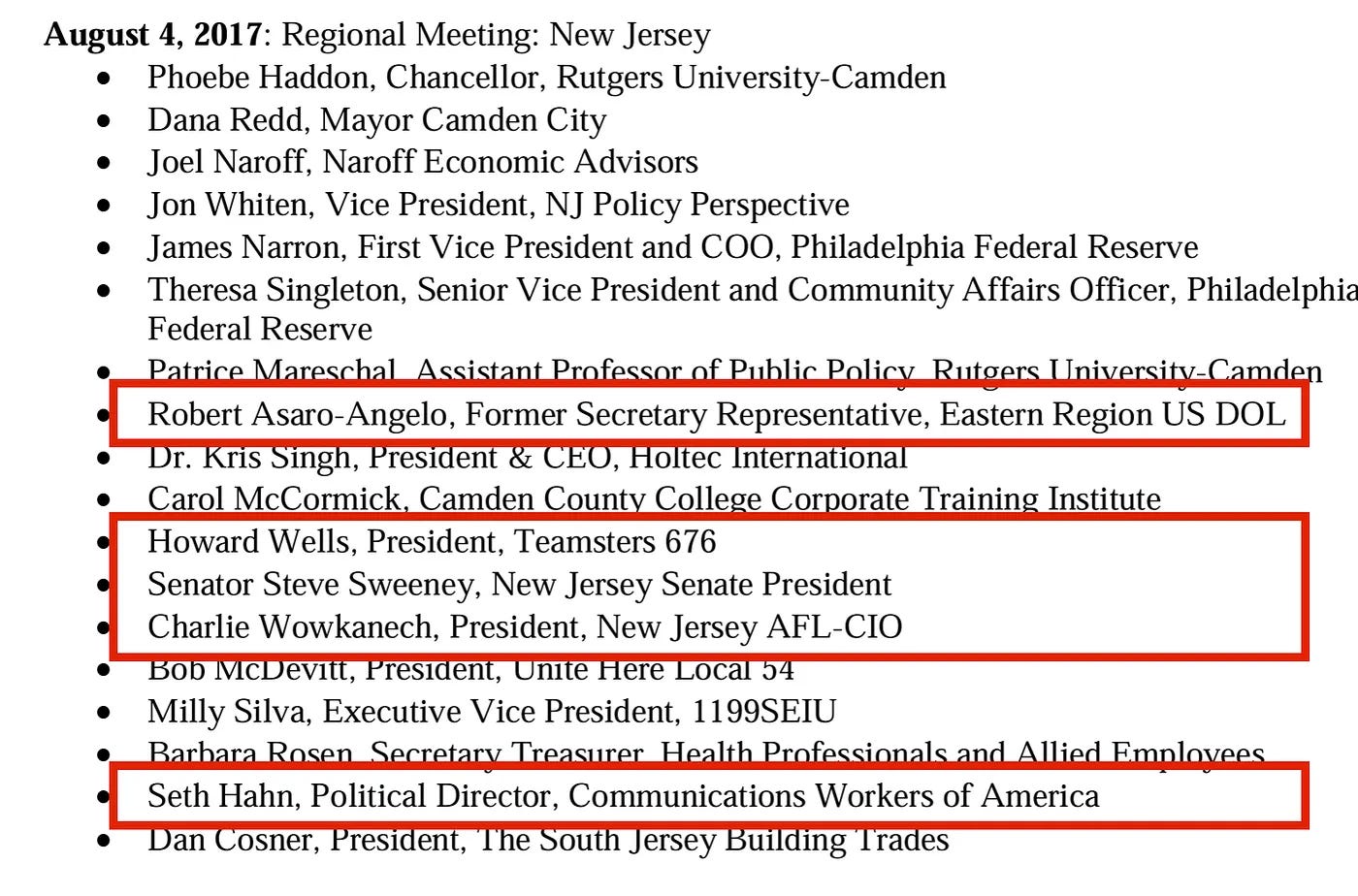
Sweeney, after this report was written, proposed the state’s ABC Test legislation that failed to advance amid widespread public pushback. Asaro-Angelo proposed the state’s now-adopted and still widely opposed ABC Test rule for independent contractors. Both efforts had the strong public support of Charlie Wowkanech, the head of the New Jersey AFL-CIO.
I was surprised to see last week that government links to this report are now dead. Especially because when I checked the link from the New Jersey congressman’s website at the start of this month, it still worked.
It did occur to me, when I began writing about this report in December 2025, that it might someday vanish from the Internet. It’s a treasure trove of information, especially with all the names it lists of people involved with these ideas in multiple states.
So, I downloaded a copy of the report for safekeeping. Here it is:
I was reading it again this month because what’s in the report is relevant to a piece I was writing about a bill just introduced in New Jersey. That legislation would make the report’s “admittedly radically different” policy idea, known as sectoral bargaining, my state’s reality. The legislation could give union organizers power over 100% of workers in an industry without 70% of them ever even getting a vote on whether they wish to join a union.
The URLs
I’m aware of two links where this report was previously available:
The URL that I have linked to regularly, and that I checked earlier this month to make sure it was still working, was on the website of Congressman Norcross: https://norcross.house.gov/_cache/files/2/d/2d223aba-2959-4621-9b9a-bba177198d0c/FD87822E685CC2600A030234CDB1BE10610678055E3E38F170E080D76770792C.report---future-of-work-wages-and-labor---18.09.05.pdf
The URL that the original press release from Congressman Pocan’s office about the report linked to, and that the AFL-CIO’s original announcement about the report linked to, was on the website of Congressman DeSaulnier: https://desaulnier.house.gov/sites/desaulnier.house.gov/files/REPORT%20-%20Future%20of%20Work%2C%20Wages%2C%20and%20Labor%20-%2018.09.05.pdf
This is what now appears at those URLs:
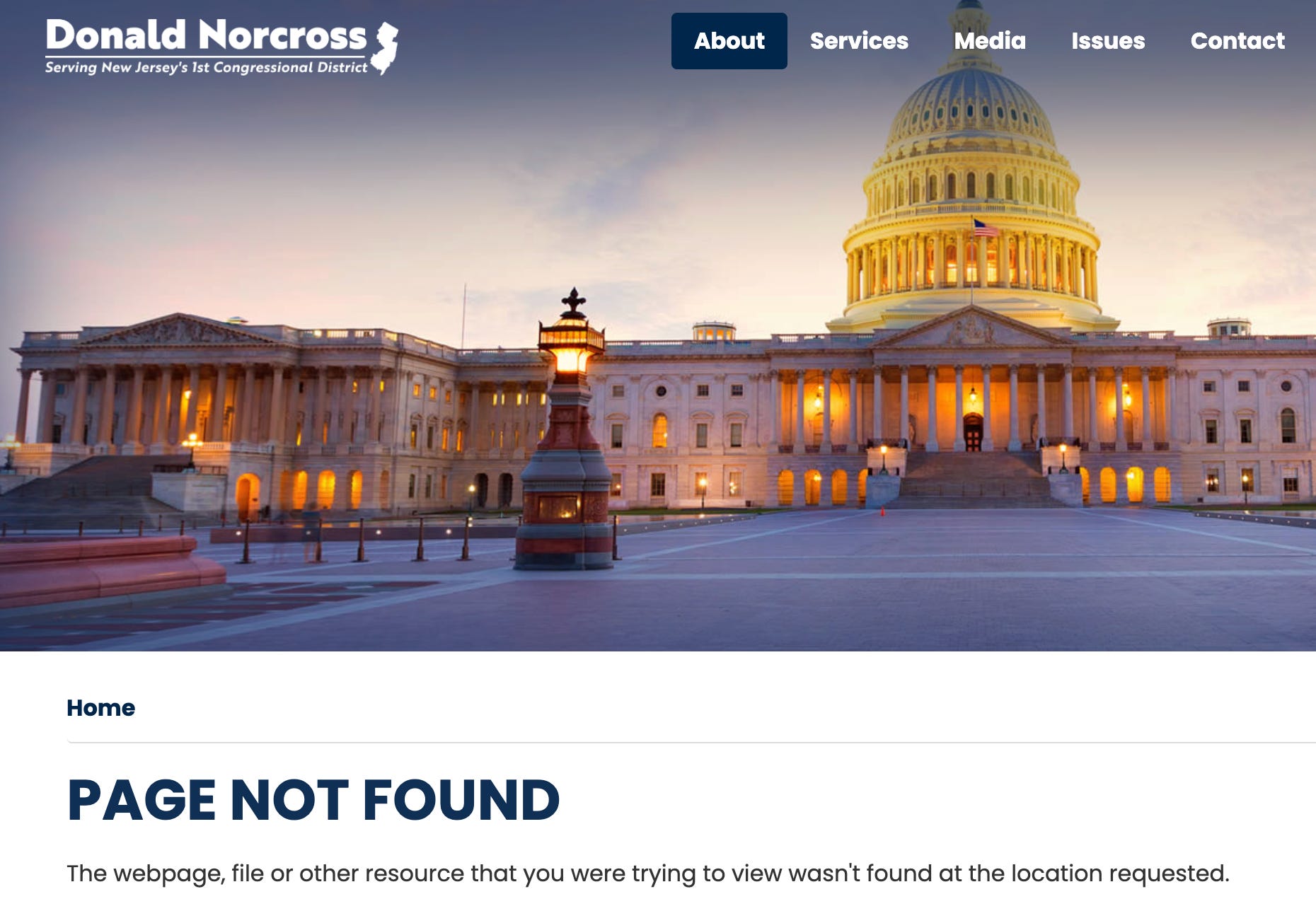
I reported the broken URL via an online form to the office of Congressman Norcross and didn’t hear anything back. I got hold of a staffer in Congressman DeSaulnier’s office by phone who confirmed that he couldn’t access the report through the URLs anymore either. He said he’d look into it. If I ever hear back from him, I will update this article.
Websites have snafus. Links break. Content gets lost. It happens all the time.
It’s certainly possible that something mundane happened with these URLs.
Also Worth Noting
The timing with this report being unavailable is interesting because of the push to introduce the “admittedly radically different” policy of sectoral bargaining across the United States. What’s in the 2018 report could be particularly problematic for the sectoral-bargaining legislation just introduced in New Jersey, and for New Jersey Governor Mikie Sherrill if she signs the bill into law.
Governor Sherrill—who says she’s fielding questions about running for president, and who is trying to position herself as a pro-business moderate—is already facing serious questions from legislators on both sides of the aisle about the rule for independent contractors that her administration just adopted despite 99% public opposition. That rule is based on regulatory language called the ABC Test, similar to a federal bill that includes the ABC Test and that Sherrill is already on the record as strongly supporting. The Democratic Socialists of America call that federal ABC Test bill their “highest national priority,” and the Communist Party USA has championed it. If Sherrill also signs the bill about “admittedly radically different” sectoral bargaining into law in New Jersey, she would once again be aligned with the Democratic Socialists of America, not a moderate, pro-business position at all.
Similarly, what’s in the 2018 report could be problematic for potential presidential candidates California Governor Gavin Newsom and Illinois Governor JB Prtizker. They both have already signed legislation that makes the “admittedly radically different” idea of sectoral bargaining a law in their states. And that’s on top of the destructive ABC Test law that Newsom signed in California.
Most Americans haven’t noticed the introduction of sectoral bargaining, in particular, because so far the concept is being limited to rideshare drivers. The headlines are about that industry alone, so most people assume what’s happening won’t affect them.
In reality, the 2018 report makes clear that the introduction of sectoral bargaining for a single industry is just the start of a grander plan—what the report calls a “pilot program.”
The report also notes, “When first exploring, the government should not be involved as a voice at the table in the negotiations,” suggesting that future versions of sectoral bargaining could be different from these earliest models.
Far less circumspect about the grander plan is the Service Employees International Union, which announced several years ago that it intends to do something unprecedented through sectoral bargaining, across all kinds of industries:
“[W]hen we say Unions for All, that’s just what we mean—nobody left out or left behind. We will write new rules so that all workers—of every race, from every place—can organize across employers, industries, sectors, and geographies, not just worksite by worksite.”
Given the fact that 80% of non-union employees say they either do not wish to join a union or are at best neutral on the subject, presidential candidates helping to make the sectoral-bargaining plan a reality would have a hard time defending that position as moderate. It’s similar to defying 99% public opposition to what’s happening with the ABC Test and independent contractors.
The 2018 report could thus be a way for political opponents to tag these governors, all Democrats, with the language of their own fellow Democrats—“admittedly radically different.”
Notably, Republican Vice President JD Vance has indicated support for exploring the idea of sectoral bargaining, too.
All of which makes the timing interesting about whatever happened with the URLs to the 2018 report.