

October 1, 2026, just may go down in history as the day that Big Labor smashed independent contractors the hardest in any 24-hour period, anywhere in the country.
Two things happened on that same day last week in my home state of New Jersey. The first thing, which was extreme, got a lot of press attention. The second thing, which went beyond extreme to outright radical, appears to have escaped the media’s gaze altogether.
First, Governor Mikie Sherrill’s Labor Department went ahead and implemented its own interpretation of ABC Test regulatory language for independent contractors. There was plenty of news coverage about how in doing so, Sherrill’s administration ignored 99% public opposition, thumbed its nose at bipartisan lawmakers including the Senate President, sided with extremists who compared the business practice of independent contracting to child labor and human trafficking, blew off the concerns of the state’s two biggest business organizations, and codified what attorneys say is now “one of the most business-unfriendly tests for IC status in the country [that] interprets that test in a particularly unhelpful manner.”
Second, that same day—with zero media coverage that I can find—state Senator Gordon Johnson, the Democrat who chairs the New Jersey Senate Labor Committee, introduced Senate Bill 4709. This legislation would create what’s known as sectoral bargaining in the State of New Jersey, allowing union representation of every worker in an entire industry, all at once.
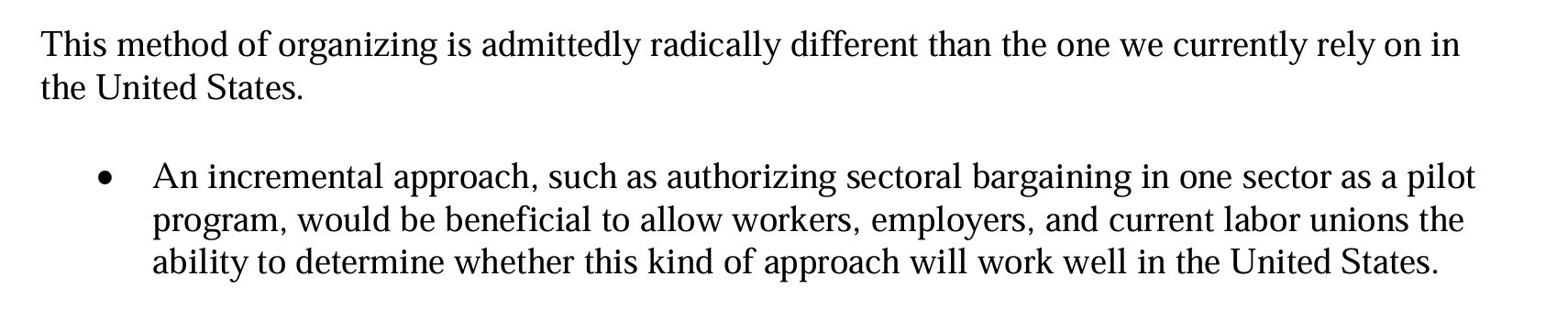
Sectoral bargaining is a practice that even some of the nation’s most prominent unionists—co-chairs of the Congressional Labor Caucus, including U.S. Representative Donald Norcross of New Jersey—call “radically different” from the way unionization has historically been done in the United States of America.
The introduction of Senate Bill 4709 moves the State of New Jersey from a status of extreme to radical in its efforts to change laws and regulations in ways that give Big Labor unfair and unprecedented leverage over everyday people.
Big Labor’s ‘Pilot Program’
I’ve been writing about sectoral bargaining since summer 2024. That’s when it became clear that after trying to use weaponized ABC Test regulatory language to reclassify huge swaths of independent contractors as unionizable employees, the unions next would be trying to bring the concept of sectoral bargaining to the United States of America.
Sectoral bargaining is different from the kind of unionization that we’ve all known for our entire lives. In America, unions have been legally required to organize only a single company at a time. For example, they can’t unionize the whole auto industry at once; they first have to get employees at a Ford plant to unionize, then go to a Chevrolet plant, let the employees at that location vote on whether to unionize, and so forth.
In legal lingo, this means unions have to focus organizing efforts on a single enterprise at a time. Everybody at each enterprise gets a vote on whether to join the union, and the union needs a majority of the votes to succeed. This is what we’ve long had in the United States, known as enterprise bargaining.
With sectoral bargaining, the workplace-by-workplace limitation is removed.
So is the requirement that every worker gets a vote.
As is the need for the union to get a majority of votes to become everyone’s representative.
With sectoral bargaining, all of those guardrails against forced union representation are gone.
Some powerful elected officials support this way of shifting our nation’s unionization methods. In 2018, a report that Congressman Norcross co-wrote described how unionists could start to impose this sectoral bargaining idea on the American workforce by focusing on a single industry. Norcross and his co-authors described doing so as creating a “pilot program” that could get the legal concept of sectoral bargaining into law:
New Jersey Senate Bill 4709 is now intended to advance this radical pilot program, which the unionists have been working on in other states, as well.
In Massachusetts, they got the sectoral-bargaining concept into law for the rideshare industry with just 54% of the public’s vote in a ballot measure in November 2024.
Then in May 2026, the State of Massachusetts certified its first union—affecting about 70,000 rideshare drivers—without most of those drivers even voting on union representation. What the union was required to do, as a top attorney explained it here, was get signatures from 5% of all “active” drivers in the state, a threshold that then gave the union access to contact information for all the rest of the drivers in Massachusetts. The union could then collect signatures from just 25% of those active drivers and be automatically certified as the bargaining representative of every driver in Massachusetts.
Put another way, the majority of rideshare drivers in Massachusetts are now under union representation that they never voted for in the first place.
While that’s all been happening in Massachusetts, Governor Gavin Newsom signed a sectoral-bargaining law in California in October 2025, letting unionists target the rideshare industry there too. In September 2026, that union was certified, with support from just 30% of rideshare drivers in the state.
Minnesota lawmakers also introduced a similar bill in 2025, but it hasn’t become law in that state yet.
So, now comes New Jersey’s Senate Bill 4709, attempting to create a third state with a sectoral bargaining law that targets the rideshare industry and advances the unionists’ pilot program that’s intended, in the long run, to impose this kind of sectoral-bargaining scheme across all kinds of industries.
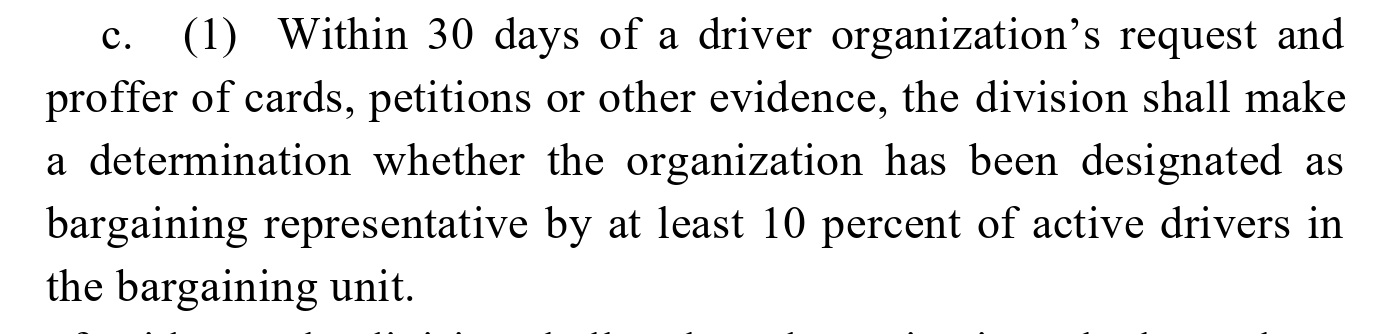
The New Jersey bill would allow a union to move forward with just 10% of active rideshare drivers agreeing to proceed with the effort:
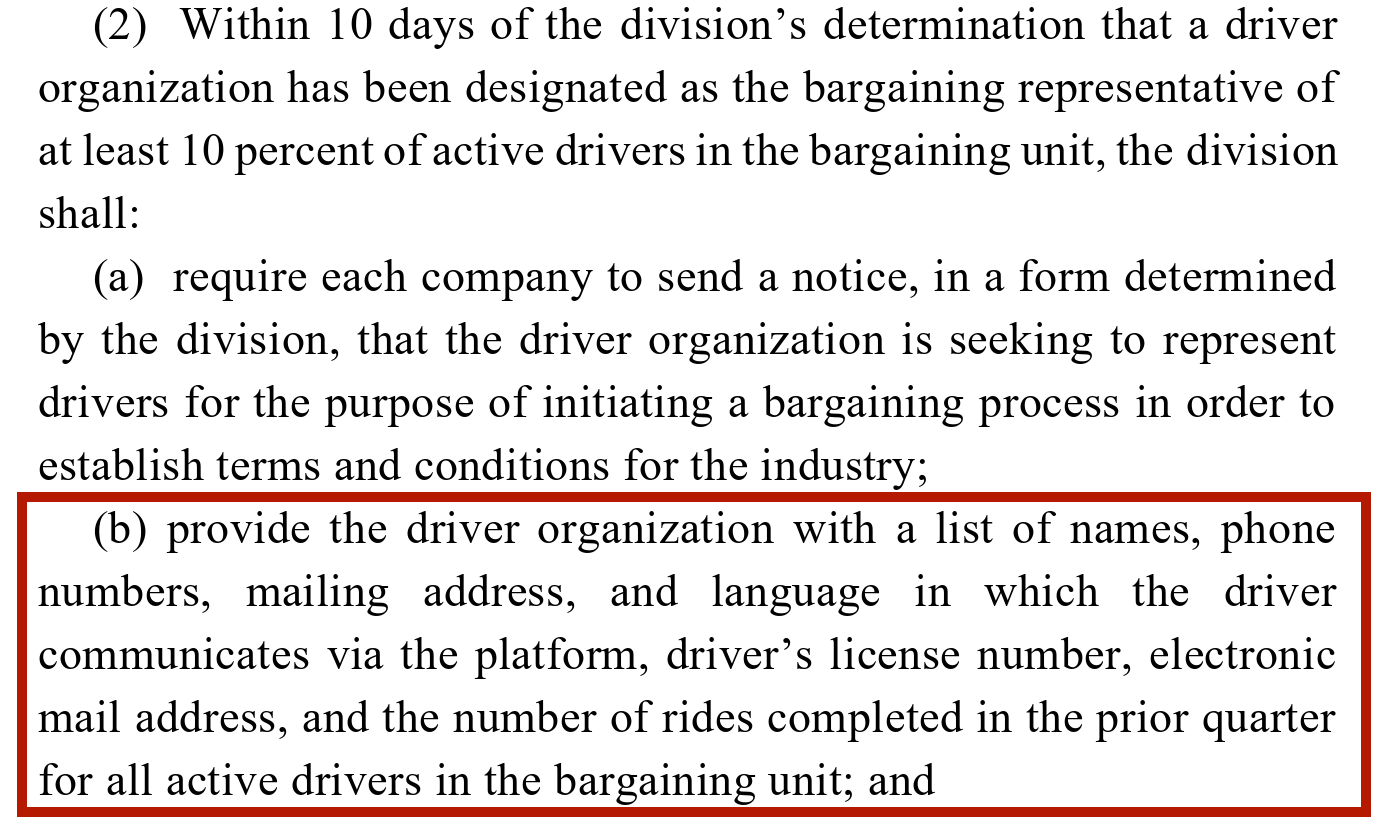
Once that 10% threshold is reached among active rideshare drivers in New Jersey, each rideshare company would have to provide all active drivers’ contact information so the union could target them:
And after that, if the union can get 30% of active drivers to say yes, then the union would represent 100% of rideshare drivers in the State of New Jersey:
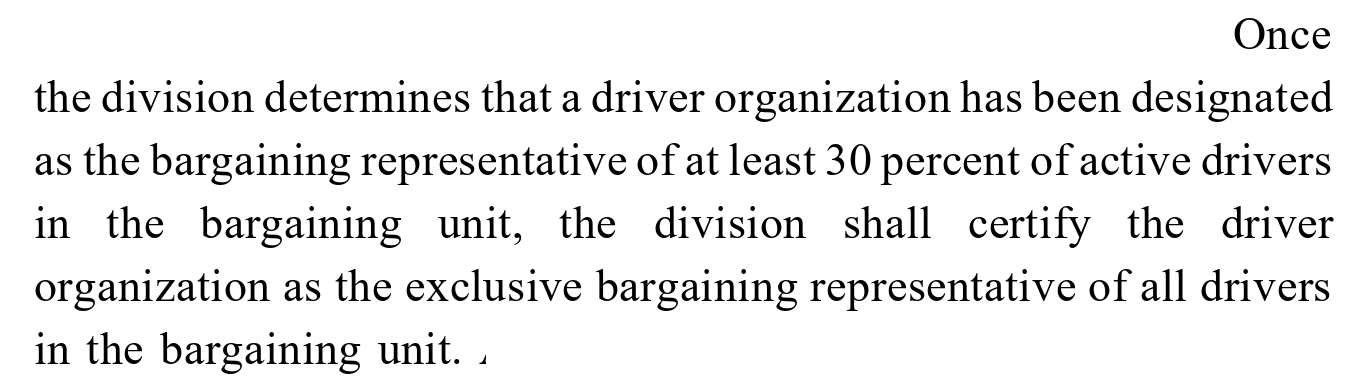
Again, for all practical purposes, this would mean the very concept of majority rule goes out the window with regard to union representation.
As we’ve seen in the other states that are part of this radical pilot program, most rideshare drivers in New Jersey could fall under union representation without ever voting for it at all.
‘We Will Write New Rules’
As I noted in December 2025, there was a flashing-red signal that New Jersey would be on Big Labor’s menu for sectoral bargaining next.
Out in California, there were actually two bills that Governor Gavin Newsom signed to give union organizers access to rideshare drivers through sectoral bargaining. As Politico reported in October 2025, these two bills were a package deal that the SEIU worked out with Uber and Lyft. Unionists got sectoral bargaining for rideshare drivers in the first bill, and then, in a second bill, Uber and Lyft got something they wanted: a way to “drastically reduce insurance coverage requirements for the ride-hailing companies.”
Politico wrote about that second bill:
“The second bill Newsom approved, SB 371 from state Sen. Christopher Cabaldon, slashes the amount of insurance coverage Uber and Lyft must carry for crashes caused by underinsured drivers from $1 million to $300,000 per incident.”
That language about underinsured drivers is why I noticed in late 2025 that New Jersey lawmakers had introduced Senate Bill 4898 and its identical companion bill, Assembly Bill 6147, here in my home state. Those bills are described like this: “Lowers minimum amount of uninsured and underinsured motorist coverage for transportation network companies and transportation network company drivers.” And both bills have since been reintroduced, in the Senate and the Assembly, for New Jersey’s current legislative session.
In other words, half of the legislative deal that led Uber and Lyft to stand down against a sectoral bargaining bill in California has been sitting ready to move in New Jersey for the better part of a year now.
And lest anyone think this “pilot program” with sectoral bargaining will stop with the rideshare industry, read how the SEIU described its plans for sectoral bargaining in April 2024:
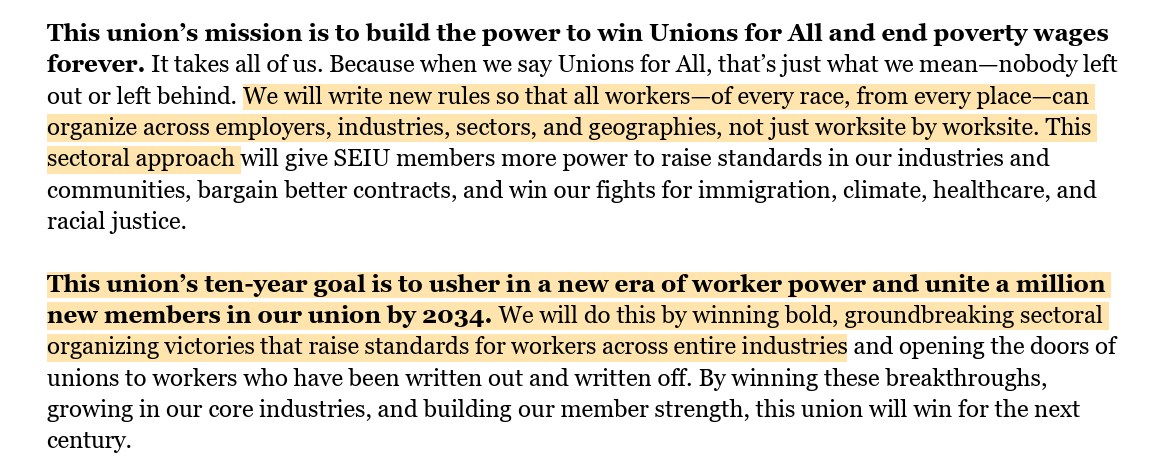
“When we say Unions for All, that’s just what we mean.”
Friends, when people show you who they are, believe them.
What You’ll See Next in the Media
Don’t expect to see any of the context that I provided above if, or when, New Jersey’s press corps reports on this sectoral-bargaining legislation.
Instead, based on what we’ve seen in Massachusetts and California, what’s most likely to happen next in my home state is the media making it seem as if rideshare drivers—not politically powerful union organizers—are the ones notching a win with this radical sectoral bargaining concept.
The headlines don’t ever say “Big Win for Big Labor.” Instead, they say things like the following:
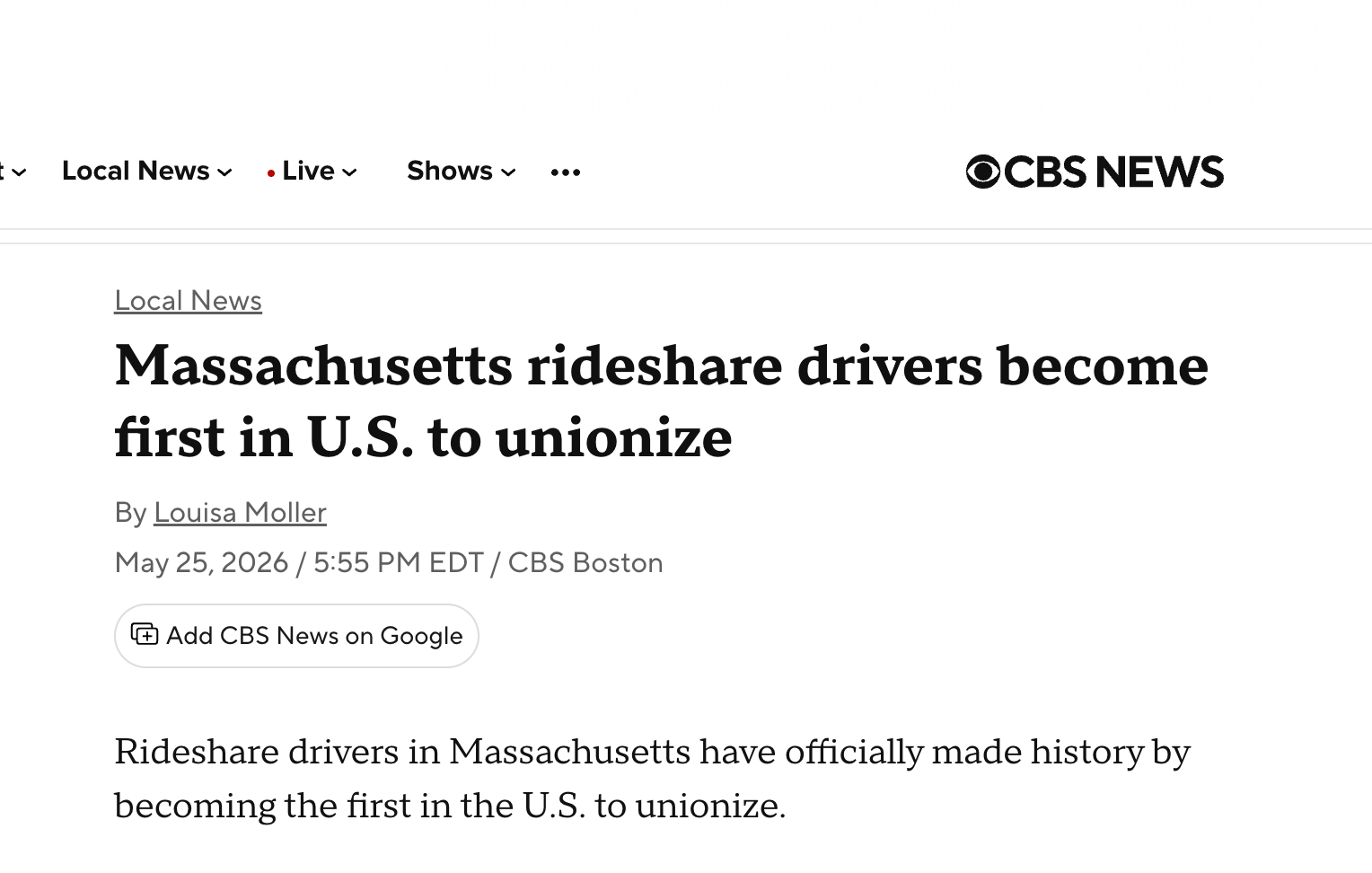
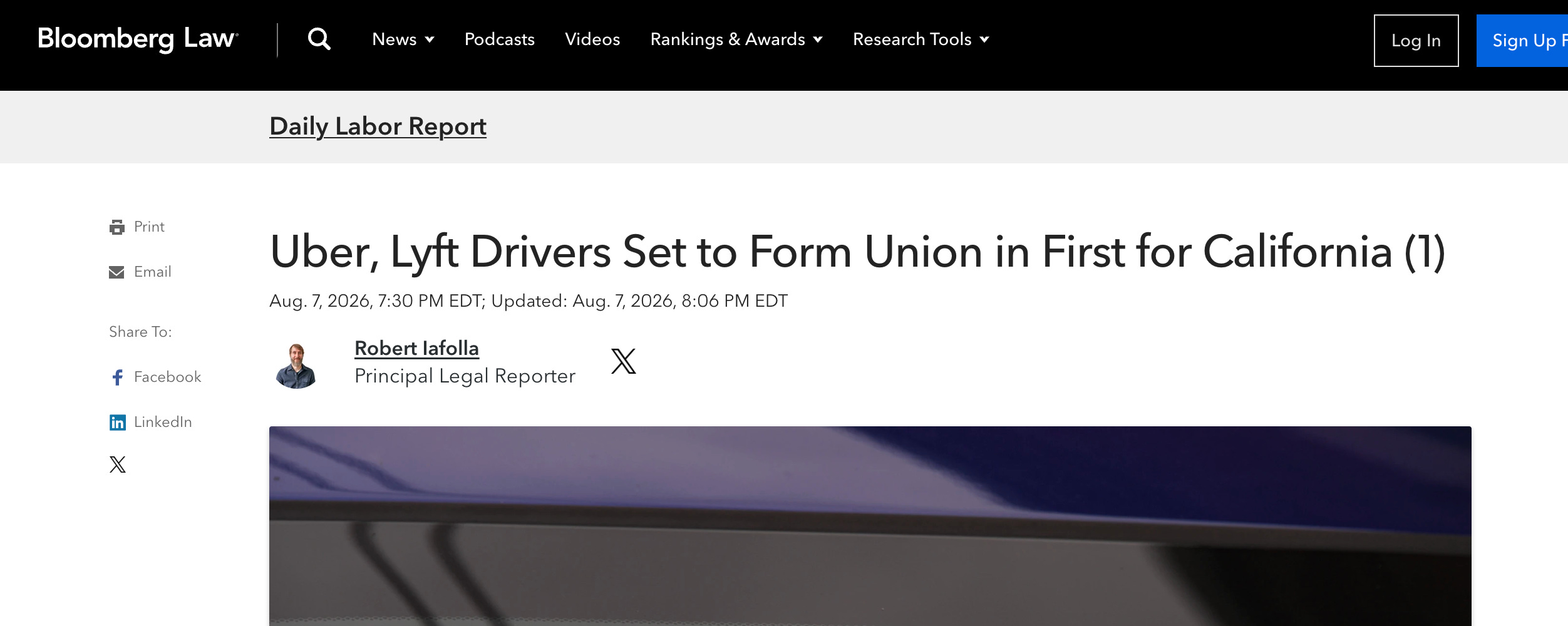
No matter what the stories in the media say, remember that sectoral bargaining is not a worker-up initiative to unionize. We live in a nation where only 8% of independent contractors say they’d prefer a traditional job, and where most non-union employees do not wish to join a union at all.
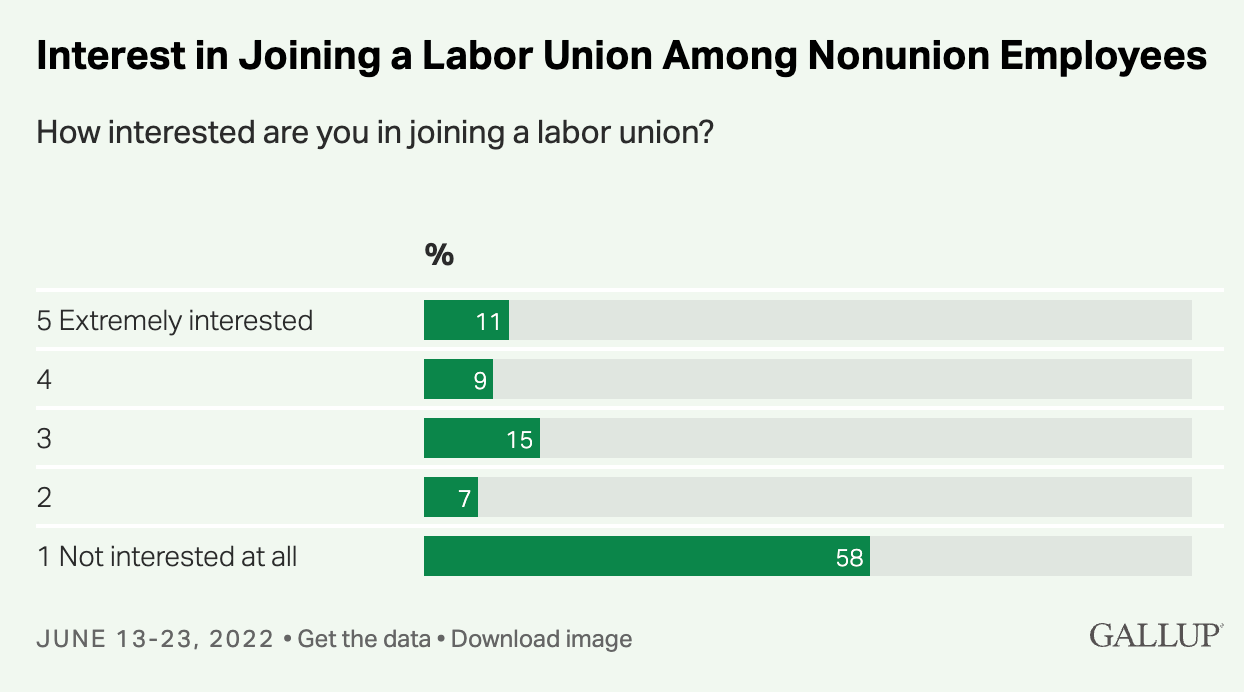
What’s happening in New Jersey’s government right now bears no relationship to what the people of this state keep making clear that we want, even when we do so by an undeniable margin of 99%, as we just did with our opposition to the ABC Test rulemaking that Big Labor backed.
Sectoral bargaining, just like weaponization of the ABC Test against independent contractors, is union bosses using political power to change our laws and regulations in extreme and radical ways, so they can achieve what they want.
rideshare drivers can make more than taxi; What does Sherrill want; screw rideshare drivers over, so the union gets a piece of the action? I say no! with good reason. Unions don't create jobs they do over time lose them. That is a fact. The only ones that are kept are state jobs like police teachers etc.
One of the biggest costs of the state taxpayers is pensions for those working less than the average person to fix the budget would take very little fix it. couple more points and longer work life instead of 25 yrs to retire 40 just like you or I. Imagine paying 5points into a pension and after 25 years getting paid based on the average of the 3 highest paid years you get that for the rest of your life! The math simply does not work but then the state is not spending their money, its ours! Things like this must be addressed and it is going to take US to push it.