

The word “affordability” is ubiquitous in political debate right now. Democrats and Republicans alike are talking about the need for an “affordability strategy” ahead of the midterm elections. Media are continually reporting on an “affordability crisis” that’s plaguing American families. One recent headline described voters’ concerns as “affordability agita” for the president.
Into this mix comes new research from the employment platform iHire, which surveyed 2,250 U.S. candidates across 57 industries this past January.
The survey results included this nugget:
“63.5% of workers who found freelance work appealing said the rising cost of living has influenced their interest in freelance or project-based work, and 51.4% said freelancing is ‘extremely important’ or ‘very important’ to their overall financial stability.”
Politicians who pontificate about affordability should be doing everything in their power to protect the freedom to be independent contractors. Just as we saw during the Great Recession and the pandemic, when times get tough, hardworking people turn to freelancing.
Play It on Repeat
Quite a few of the iHire research findings line up with results from other recent research—including the fact that most people who are freelancing are doing so by choice.
Contrary to the freelance-busting brigade’s claims that independent contractors are all a bunch of victims who need traditional jobs and unions, iHire found that flexibility (73.2%), remote work (71.3%) and the ability to strike a healthy work-life balance (60.5%) were the top three reasons respondents were drawn to freelance work. These findings line up with findings from:
U.S. Bureau of Labor Statistics: only 8.3% of independent contractors would prefer a full-time job
MBO Partners: 63% say independent work is fully by choice
Upwork: only 10% of freelancers want to return to traditional employment
Soundings/Temple University: “Many freelancers choose this path to achieve a healthier work-life balance, seeking more sustainable work environments compared to traditional roles”
Wripple: 90% of freelancers and 99% of companies that hire them reported being satisfied or somewhat satisfied with the work arrangements they have
Fiverr: “Nearly 25% of Gen Z respondents now believe that freelancing is more stable than a traditional full-time job”
And lots more research that you can find here in a list that I regularly update with links to recent findings.
The new iHire survey also asked an interesting question about how people who are freelancing would describe themselves. Here’s what the respondents said:
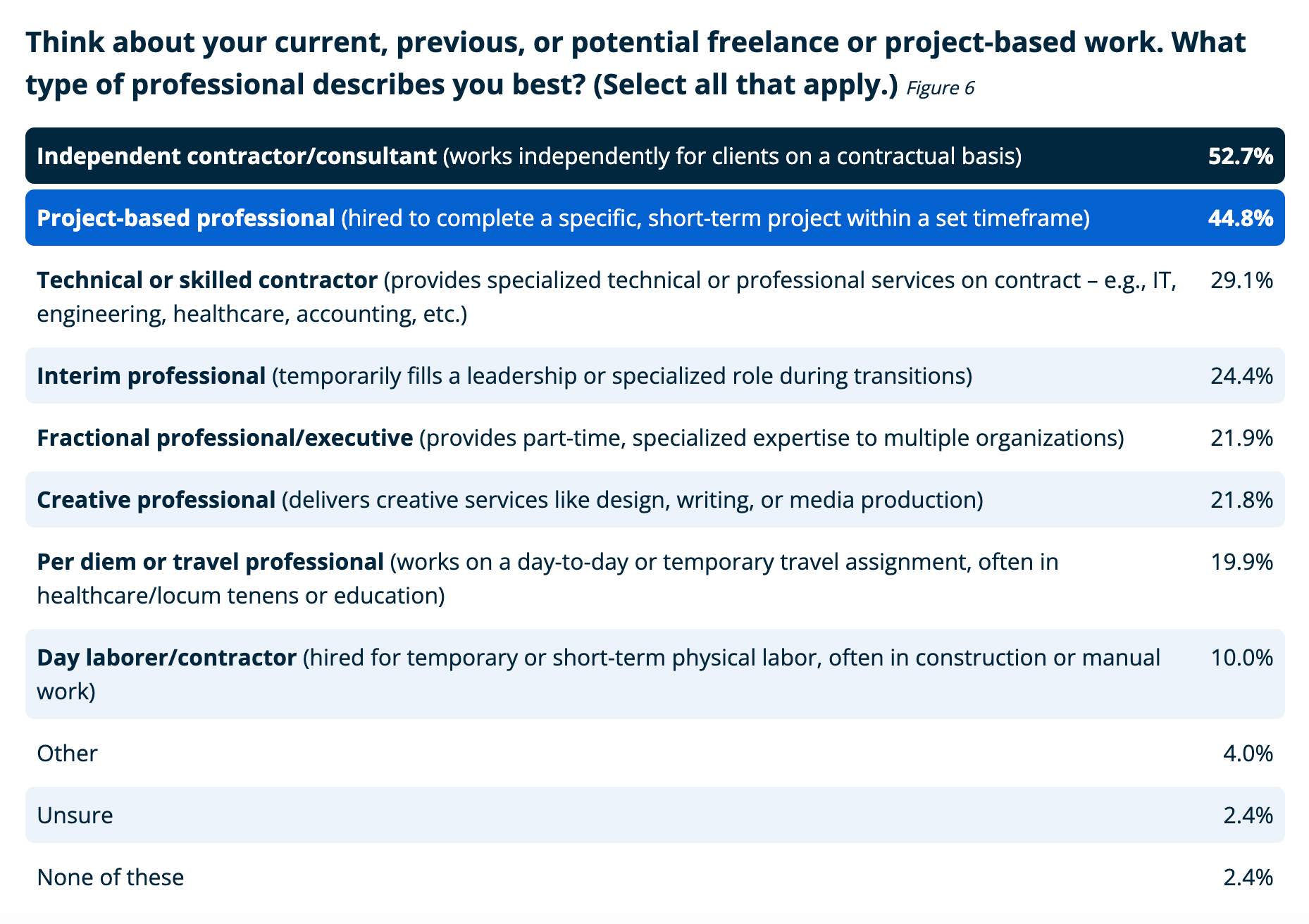
Think about that chart the next time somebody tries to tell you that independent contracting is synonymous with being an Uber driver. Or the next time someone from a construction union says we have to restrict all kinds of independent contracting because there’s employee misclassification happening in the construction industry.
Independent-contractor policy affects us all, including millions of highly skilled professionals who should not have to fight for the freedom to continue earning a living.
The Flexibility Argument
One other finding in the iHire research caught my eye, because it flies in the face of unionists’ false claims that traditional employees who report to a boss can have as much freedom and flexibility in their lives as people who are independent contractors.
Yet again this week, in fact, this claim turned up. The New Jersey AFL-CIO sent an e-mail to members of my state’s Legislature, claiming that independent contractors who are reclassified as employees “can easily be in compliance with the law and can still enjoy this flexibility as a W-2 earner (employee).”
Compare that (ridiculously laughable) claim to what is actually going on in the lives of freelancers that iHire surveyed. How many W-2 employees do you know who describe their work-life balance like this:
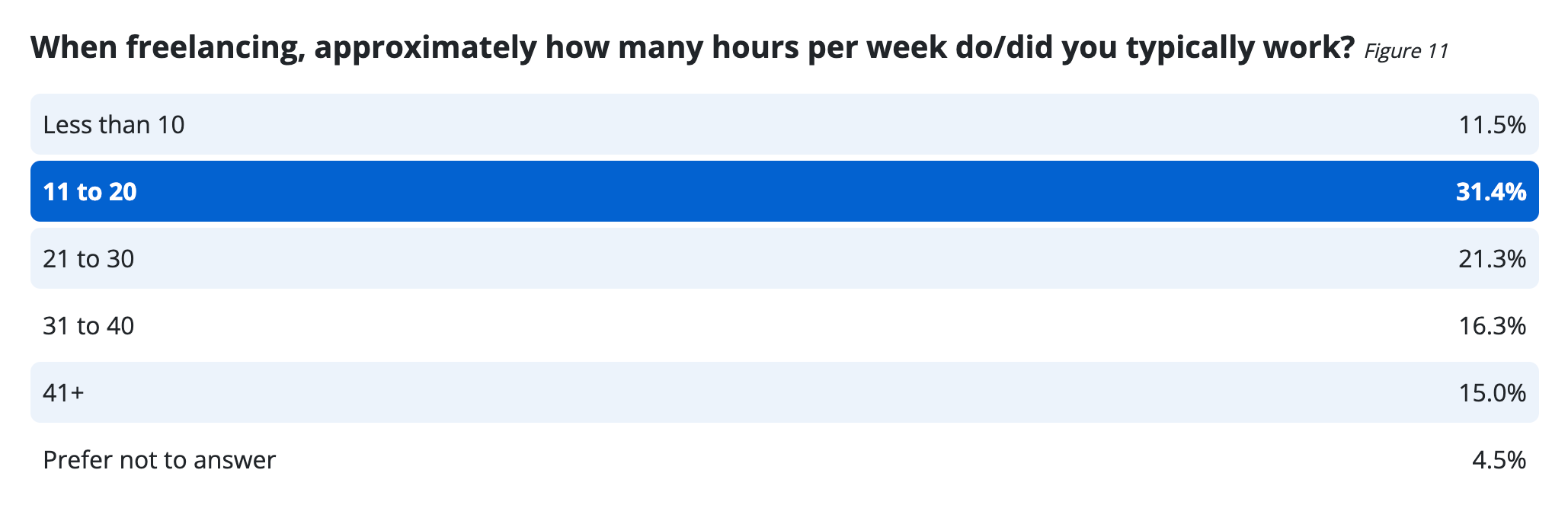
And I can tell you, as someone who has been a professional freelancer for two decades now, one of the benefits of being your own boss is being able to move in and out of those work-hour categories however you please. Work a little less one week, a little more one week—it’s entirely up to you as an independent contractor.
There is no boss in the world who can compare with having no boss at all. And freelancers know it, based on this bit in the iHire report:
“Our survey showed that the motivation behind freelancing isn’t necessarily money—it’s lifestyle. Specifically, flexibility (73.2%), remote work (71.3%), and the ability to strike a healthy work-life balance (60.5%) were the top three reasons respondents were drawn to freelance work, above earning supplemental income (53.1%) and making more money/higher pay (39.9%).”
Yet again, the research shows that most independent contractors are choosing self-employment. We’re doing it for a better life, for a better income. We’re striving to achieve affordability with flexibility.
Any politician who claims to value those things should be doing everything possible to stop the freelance busting we’ve been forced to endure for years now. Stand with us, not against us. Protect and preserve our freedom to choose independent contracting.
Back in the '00s, I used to do a survey on freelancing called Freelance Forecast. This is what I wish it would have been! 🤣