

There’s a big media push going on right now for a New York City bill called the Delivery Protection Act.
Leaders of the Teamsters union—taking a page out of the AFL-CIO’s playbook—just stood side by side with leaders of the Democratic Socialists of America to rally support for this bill. The professionally printed signs, the Teamsters press release and the speeches have all been laser-focused on how this bill would give delivery drivers leverage against what they describe as one big, bad company: Amazon.
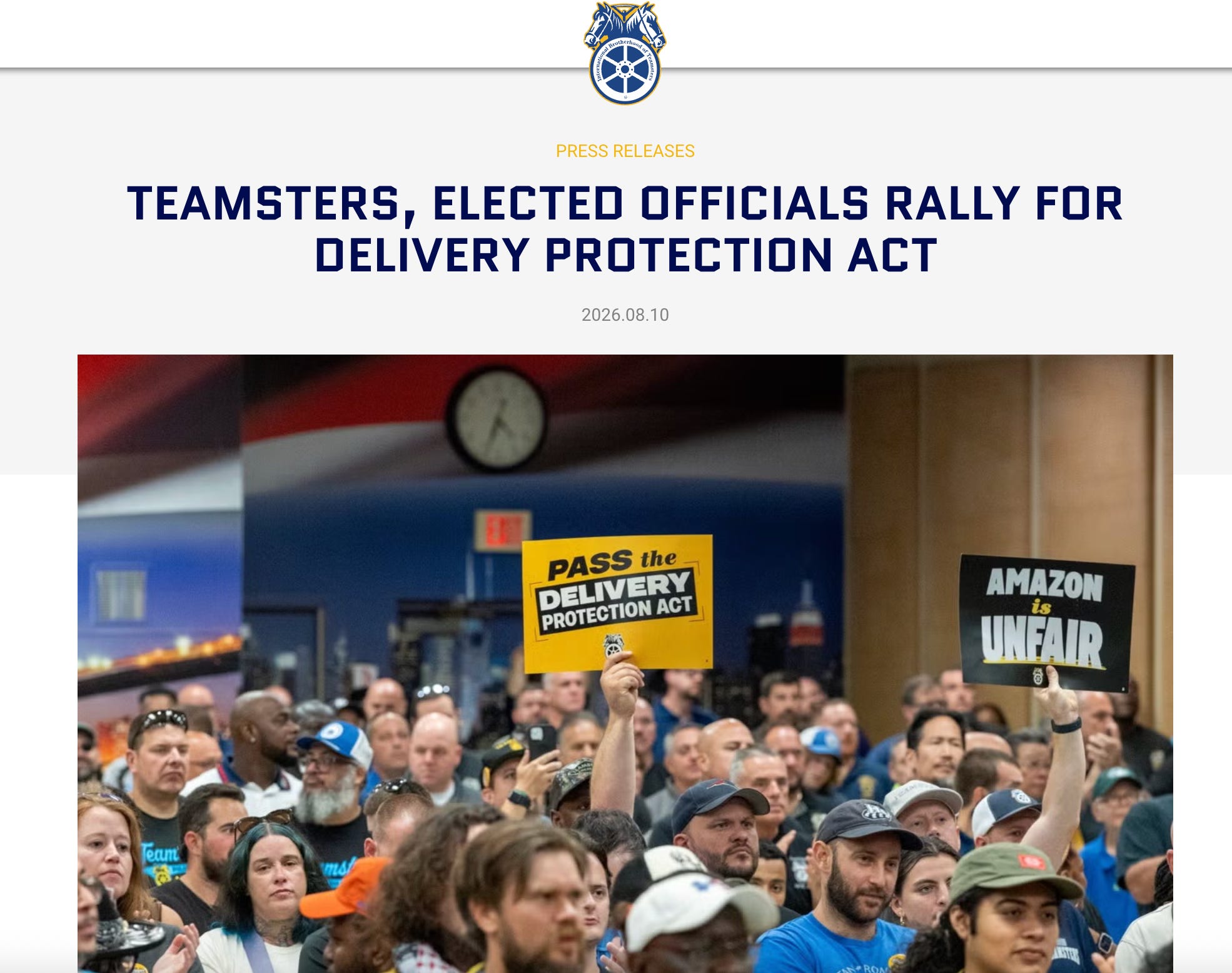
Headlines in the media have followed suit, with everyone from The New York Times to The Wall Street Journal telling audiences that this legislation targets Amazon:
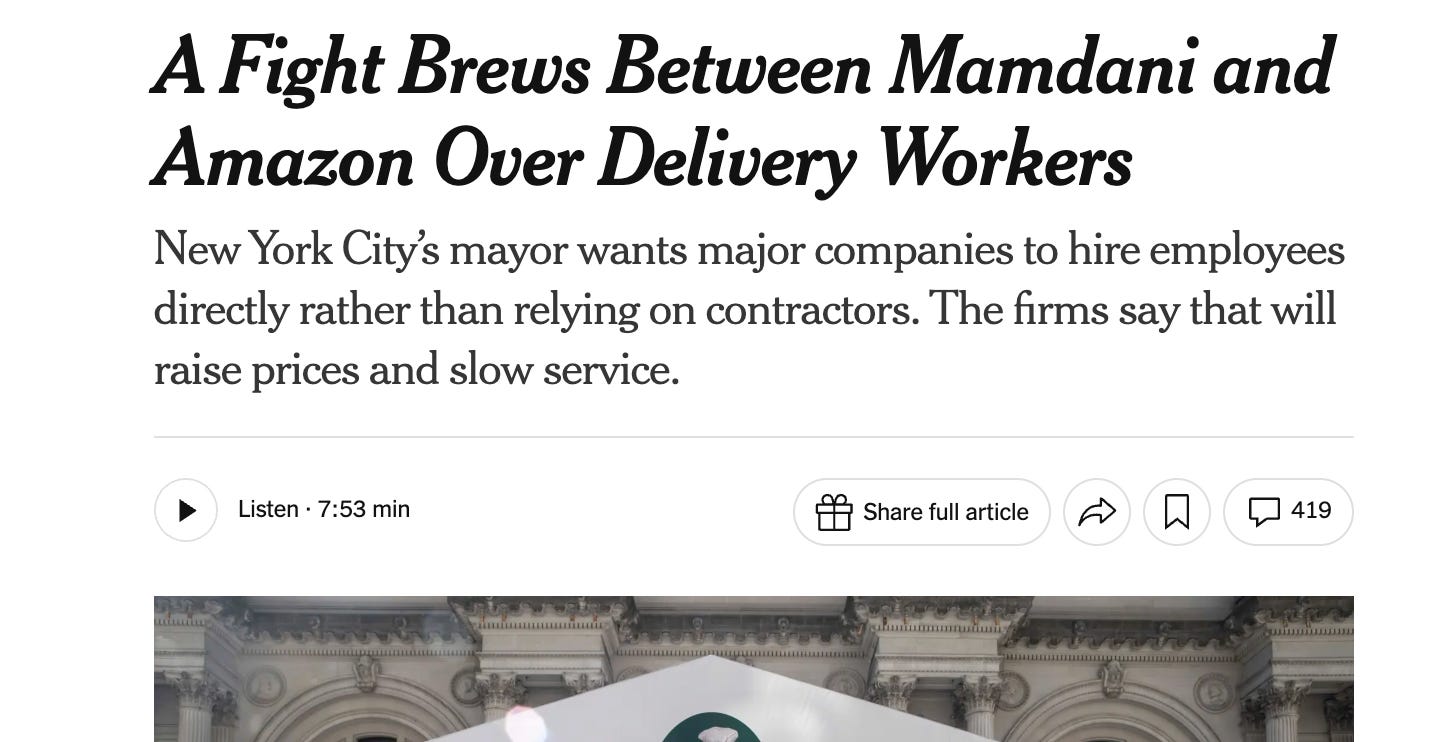
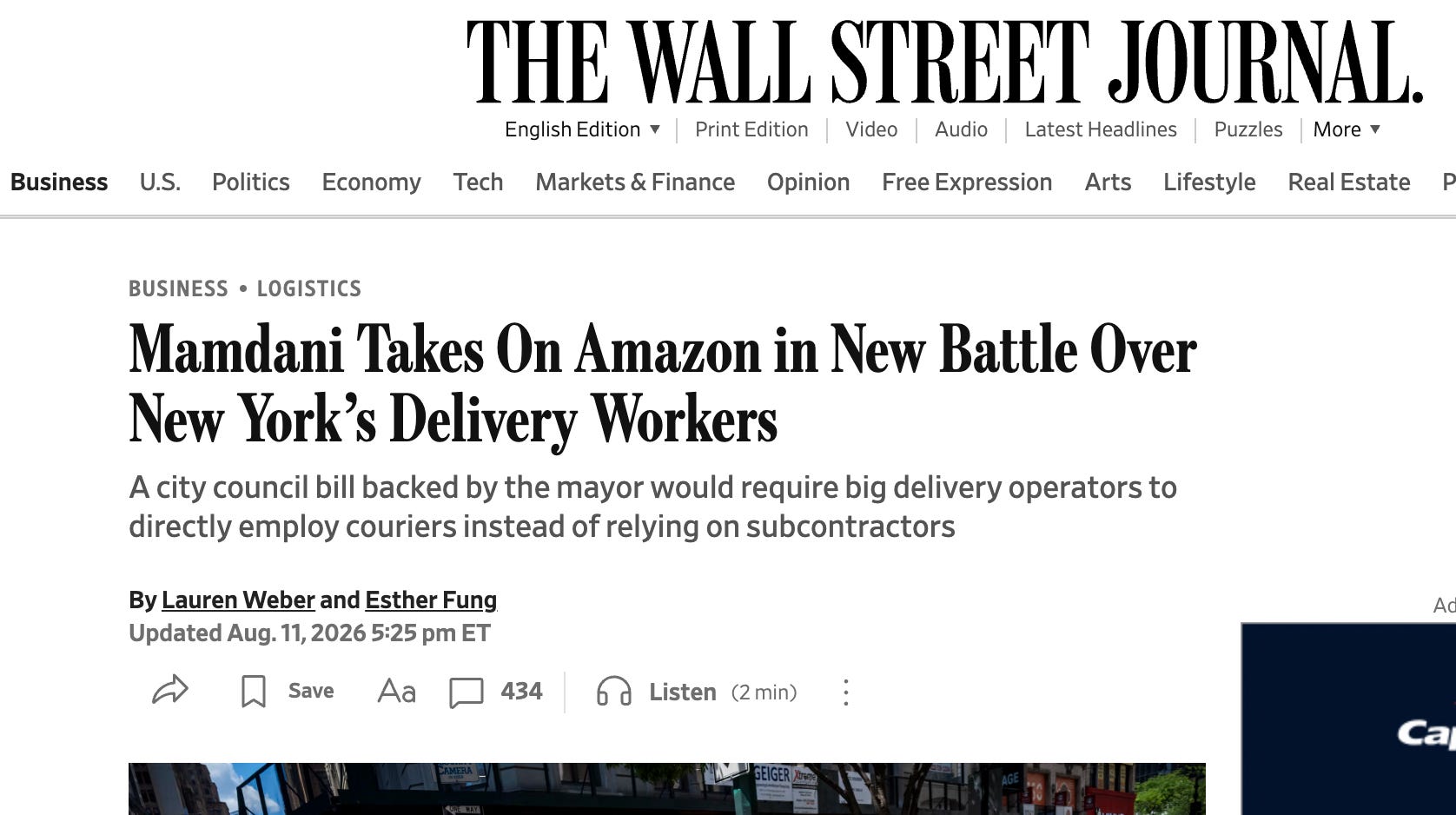
But those headlines are only part of the story.
To their credit, farther down in their article, the writers and editors at The Wall Street Journal correctly identified this New York City bill as ultimately being about much more than Amazon. They described the Delivery Protection Act as the latest salvo in the broader freelance-busting war that’s been ongoing nationwide for years.
The Wall Street Journal wrote:
“If the bill passes, New York could become the first city to require last-mile operators to make delivery workers direct employees. It isn’t the first local or state government to try it. The New York City bill is one of several efforts by cities and states to rein in a broader trend toward outsourcing work to contractors, freelancers and gig workers.”
The Wall Street Journal then gave brief background about California’s Assembly Bill 5, a law that passed in 2019. AB5’s unionist backers touted it in the media as protecting drivers from what they described as the big, bad company Uber, just as backers of New York City’s Delivery Protection Act are touting it as protecting drivers from Amazon.
In reality, AB5 tanked all kinds of self-employment and overall employment. That California bill’s language ultimately led lawmakers to exempt more than 100 professions so that everyone from attorneys to graphic designers could try to continue earning a living as independent contractors. As many as 1 million people were affected, according to the nonpartisan California Legislative Analyst’s Office.
Take one look at the actual language of New York City’s Delivery Protection Act, and even a non-lawyer like me can see that it portends something eerily similar to California’s AB5. The slope is slippery. This bill’s language could be used in the future, with just a bit of alteration, to force union-ready employment status on all kinds of people who are currently earning some or all of our income as our own bosses.
Heck, they might only have to change a couple of words.
Section 20-566.3
This link will take you to the full text of the Delivery Protection Act, whose primary sponsor is New York City Councilmember Tiffany Cabán, a Democratic Socialist.
Again, I’m not a lawyer. But after all these years of fighting to keep my freedom as an independent contractor, I can recognize the kind of language that is being used to threaten self-employed people nationwide.
The lines in the Delivery Protection Act that caught my attention are highlighted below:
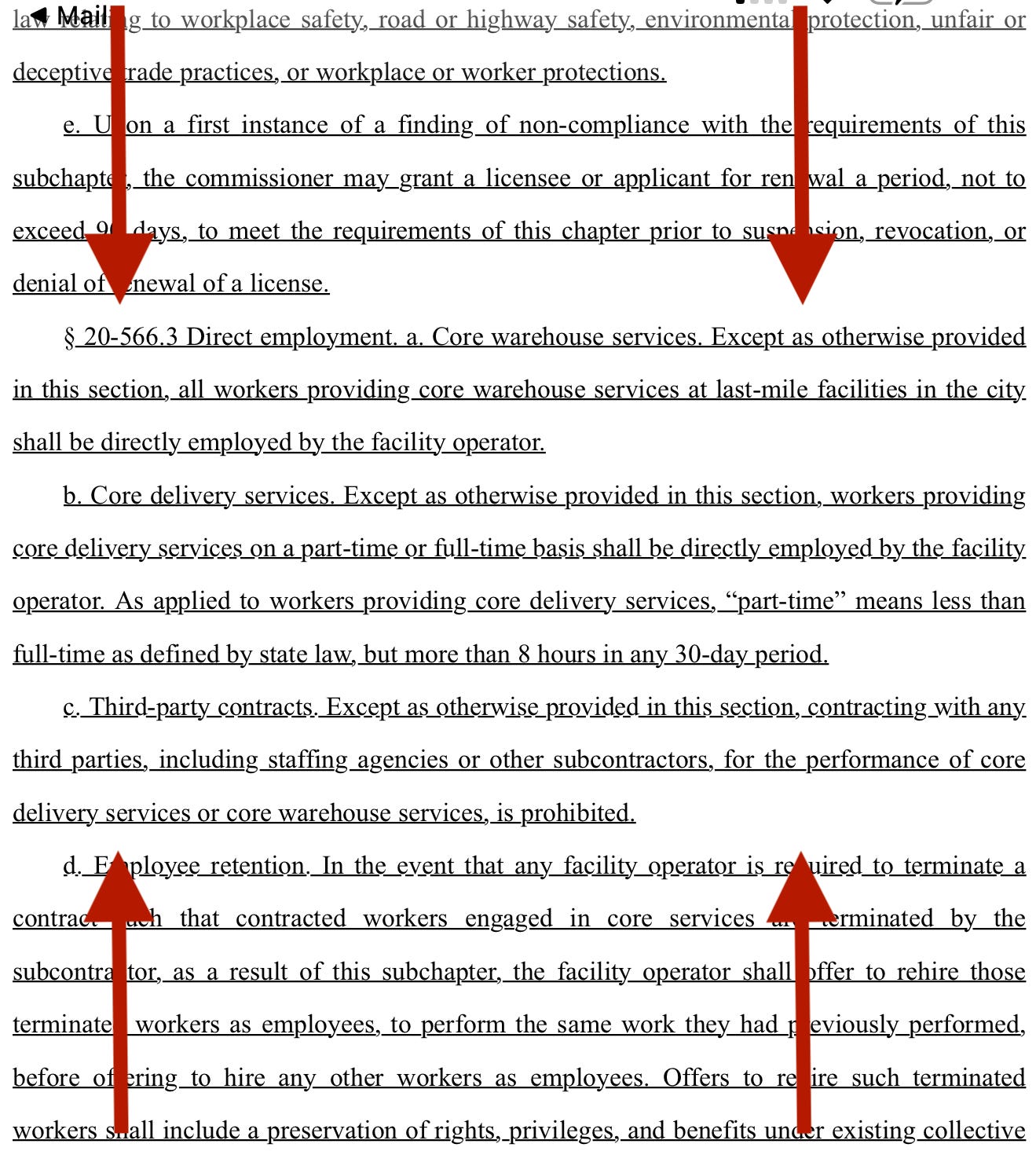
Yes, that language is specific to certain types of businesses: delivery and warehouse. But the language about “core delivery services” and “core warehouse services” is notable.
Simply remove a single word—either “delivery” or “warehouse”—from future bills, and think about what you’d get.
Anything the government deemed “core services” for any kind of business or industry could only be done by unionizable employees. The language could be edited to target everyone from cartographers to boat captains to writers to accountants to sheep shearers.
This seems like yet another way of trying to achieve the strategy that unionists detailed in 2018, to shift entire industries into employee status whether the current independent contractors are properly classified or not.
It also feels eerily similar to what the freelance-busting brigade tried to do with California’s Assembly Bill 5 in 2020, and similar to one of the many problems that experts have identified with the independent-contractor rule that’s slated to take effect in my home state of New Jersey on October 1.
How This Relates to the ABC Test
The language at the heart of California’s Assembly Bill 5 and New Jersey’s independent-contractor rule is called the ABC Test. It’s a three-part test to determine whether someone is an independent contractor or an employee. The three parts of the test are known as Prongs A, B and C.
Prong B of the ABC Test is the part attorneys routinely call the “core business” prong. It’s what unfairly snags so many legitimately self-employed people. Unionists have been finagling the language for years, to the point that in California, the way they enacted the language negatively affected people working in more than 600 professions.
In California, Prong B of the ABC Test reads like this:
“The person performs work that is outside the usual course of the hiring entity’s business.”
In New Jersey, it is worded like this:
“The work is either outside the usual course of the business for which such service is performed, or the work is performed outside of all the places of business of the enterprise for which such service is performed.”
The concepts of “usual course of business” and “core services” are from the same wheelhouse. In that sense, it’s almost as if the New York City bill took the most unfair, lopsided prong of the ABC Test and built a piece of legislation around an even more stringent version of it.
Which is, as the news coverage makes clear, notable on its own. However, what we’ve seen this past year in New Jersey tells me that even this New York City language won’t be enough to satisfy the people pushing this Unions for All campaign.
Indeed, in New Jersey, the socialist-unionist side of the debate is already proposing ways to make the language even more all-encompassing. One written public comment filed about New Jersey’s new independent-contractor rule argued that the state’s interpretation of a business’s core services should include any landscapers and janitors who show up once a week on a regular contract at a professional office such as a law firm.
I’m not kidding. That public comment stated:
“… the work of janitors and landscapers may involve the regular, weekly work of the core interest of the business in being clean and having presentable premises.”
This is a much broader interpretation of “core” services than most everyday people would intuitively understand the words on the page to mean. Most people don’t believe that a landscaper who mows the lawn at an office property for an hour a week is in the same usual course of business, or the same core business, as a lawyer working full-time at that office property.
But again, the people pushing this kind of freelance busting don’t think like the rest of us do.
Whether we’re talking about socialists who want to tear down capitalism altogether, or their comrades-in-organizing who want everyone to be an employee paying union dues, the ultimate goal is to weaponize regulatory language in ways that restrict what are currently legal business models for entrepreneurial people across all kinds of professions, everywhere.
Some Truths are Self-Evident
This past weekend, I read a book that Walter Isaacson wrote called The Greatest Sentence Ever Written. It’s super short, a mere 80 pages, but it’s really interesting.
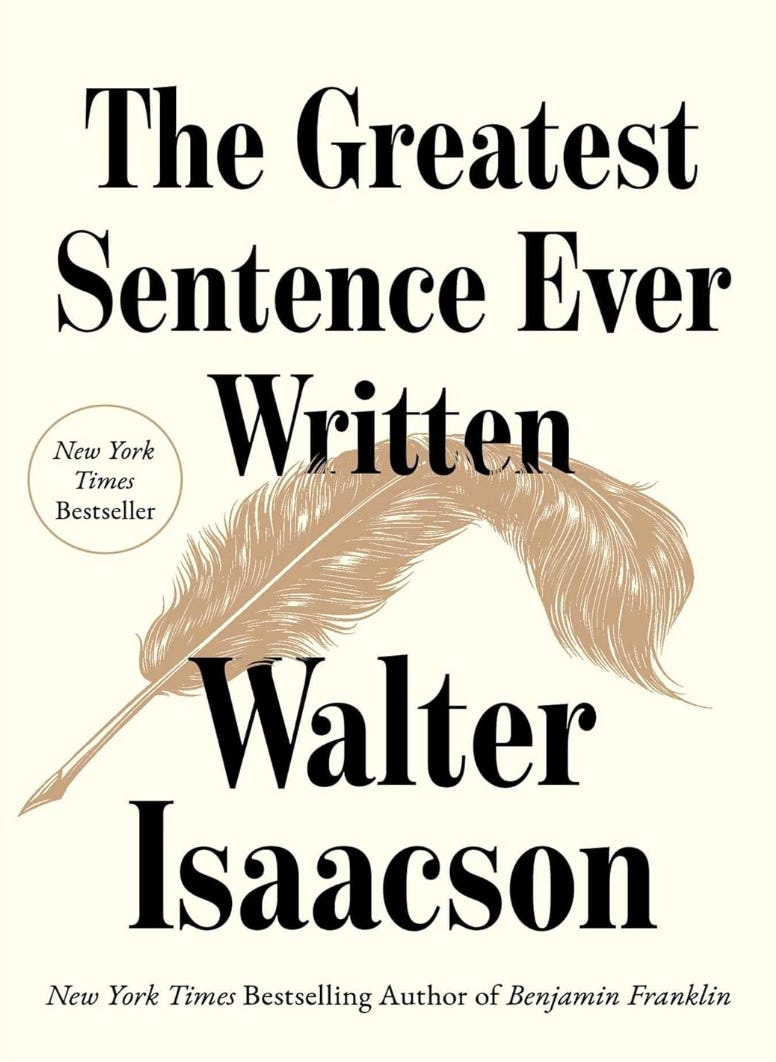
The greatest sentence ever written, according to Isaacson, is the following one from the Declaration of Independence. Thomas Jefferson wrote this sentence, and Benjamin Franklin and John Adams edited it:
“We hold these truths to be self-evident, that all men are created equal, that they are endowed by their Creator with certain unalienable Rights, that among these are Life, Liberty, and the pursuit of Happiness.”
That single sentence lays the foundation for the American Dream. It is about the fundamental belief that we do not get our rights from the government. It is about our understanding that certain rights we possess are unalienable, or undeniable. It’s about the fact that these rights are ours no matter who holds the reins of power in Washington or Sacramento or Trenton or Manhattan or anywhere else.
We have the unalienable right to liberty, which most of us understand as being free to make our own choices.
We have the unalienable right to pursue happiness, which most of us understand to include the kind of work we do, or do not do, on any given day.
The socialist-unionist coalition trying to restrict our freedom to be our own bosses stands in defiance of this sentence, and in defiance of what has long been understood as our freedom to pursue the American Dream. The audacity and scale of this affront to our fundamental freedom really does take one’s breath away.
Of course, if the freelance busters explained their goals this way, nobody would go along with them—certainly not in a nation where most people would prefer to be their own bosses, where most independent contractors wish to remain self-employed, and where most non-union employees want nothing to do with joining unions.
That’s why the freelance busters keep trying to frame this policy battle as targeting only the big, bad companies Uber and Amazon. They keep trying to convince everyone that this policy battle is only about delivery drivers.
I’m not here to defend or criticize those companies’ particular business practices, but I do believe it is paramount that we all understand how what’s happening in New York City could eventually be used in other ways.
Because, sadly, it’s also a self-evident truth after all these years that while companies like Amazon and Uber are always in the headlines, the war that this socialist-unionist faction keeps waging is in fact against us all.
I think I've told you that I'm willing to "give" wage-earning workers to the unions. They're only 20% of us and unions are obsessed with them. That would leave us with the 80% of us who are professionals, administrative and creative workers.
But would that satisfy the unions? It certainly wouldn't satisfy some of their supporters.