

On November 19, the U.S. Department of Labor announced its final independent-contractor rule.
I was honored to be an invited guest at the event with U.S. Labor Secretary Keith Sonderling in Washington, D.C., and to be a panelist on stage representing my Substack Freelance Busting as well as the Institute for the American Worker, where I am a Future of Work Fellow.
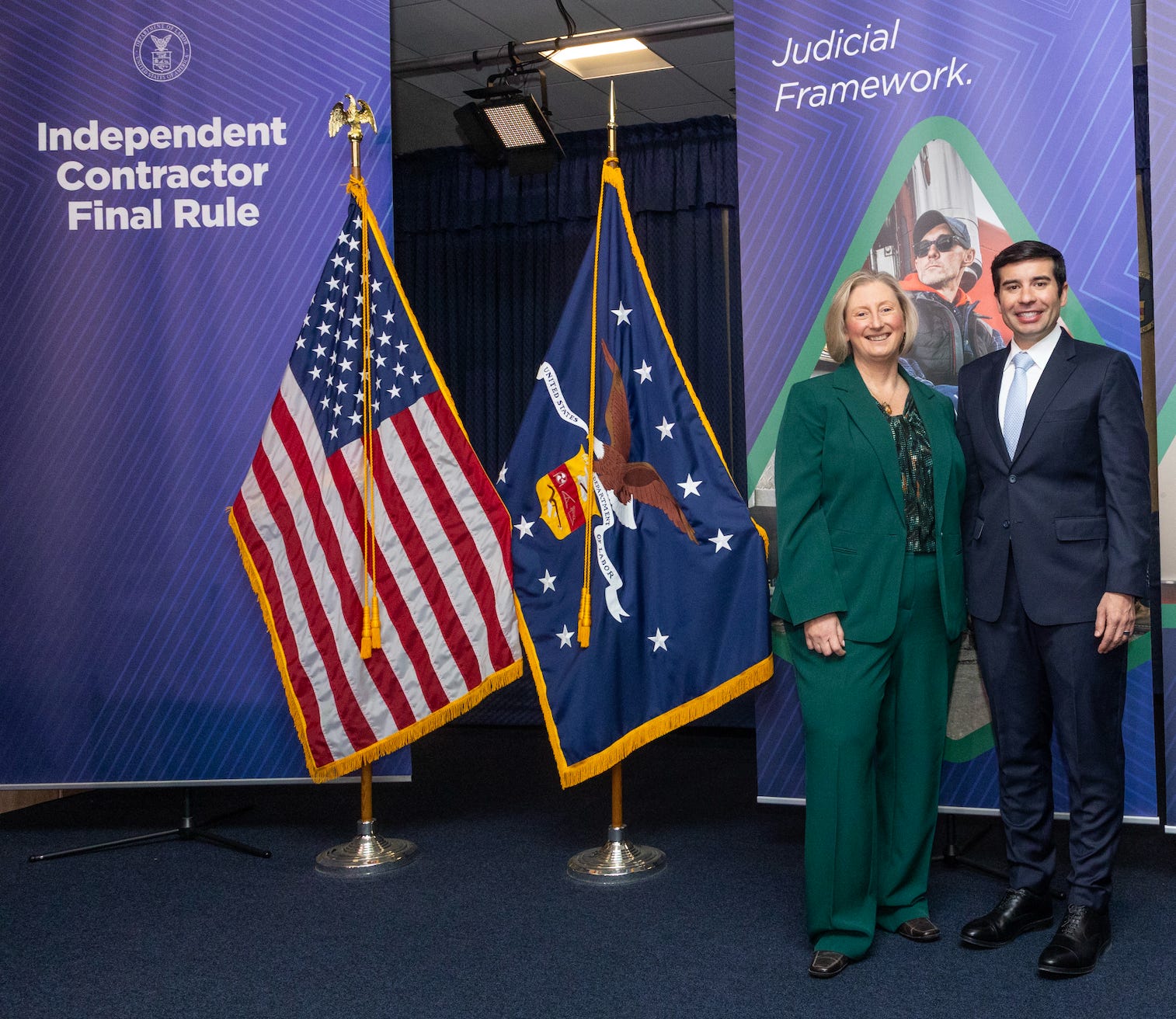
You can watch the full two-hour program on the Labor Department’s YouTube channel here. It features Secretary Sonderling’s remarks (which included jokes!) along with two panel discussions: one about real-world impacts, and one about legal and compliance details. There also are remarks at the end of the program specific to the trucking industry.
There’s been plenty of news coverage online about this rule announcement, so what I’m going to share below are my takeaways from being there in person and having many conversations behind the scenes.
Suffice it to say that this rule adoption is a win on an important battleground for America’s independent contractors—but the bigger war isn’t even close to over yet.
How Real Listening Looks
One of the biggest challenges in independent-contractor advocacy is getting some lawmakers and policymakers to listen. Sadly, this has largely become a partisan issue among elected and appointed officials—when time and time again, in state after state, we see that desiring the freedom to be our own bosses is not a partisan issue among everyday people.
I’ve testified before Congress about independent-contractor policy three times, always at the invitation of Republicans. It is a rare hearing on Capitol Hill when a Democrat even acknowledges my presence at the witness table, or the presence of any witnesses who are independent contractors. During the Biden administration, the U.S. Labor Department ignored the wishes of independent contractors to such a degree that we filed a federal lawsuit to get them to stop threatening our incomes and careers. And as readers of this Substack know all too well, the Democratic administration of Governor Mikie Sherrill in my home state of New Jersey just ignored 99% public opposition to impose a problematic independent-contractor rule that we are now working to try and fix.
The contrast could not be more stark between all of those incredibly frustrating situations and what I experienced this past Thursday at the U.S. Labor Department.
Just before 10 a.m., as invited guests for the event were filtering into the big room downstairs, I was upstairs in a small conference room with other panelists as well as Wage and Hour Administrator Andrew Rogers and several key members of his team. They were giving us an overview of what’s in the final rule as well as changes the Labor Department made from the initially proposed version.
When they asked if any of us had questions, I raised my hand. I had filed a public comment about the proposed version of the rule that supported the approach the U.S. Labor Department was taking, but that also suggested modifications in the section about freelance journalists to better reflect modern, real-world business practices.
In the conference room, I said something along the lines of, “I’m a freelance writer and editor. Did you remove or update the section of the rule that deals with freelance journalists?”
The response I received stunned me.
The expert from the Wage and Hour Division looked back at me across the table and said, “Are you Kim?”
Yes, that really happened.
It turns out he remembered the public comment I had written and filed with my fellow longtime freelancers Jake Poinier and George Hulme. Ours was one among more than 16,000 comments the Labor Department received about the proposed rule.
And the reason this expert remembered our comment as well as my name, I would learn, is that the Wage and Hour team had seriously considered the concerns we raised. They had then modified the final rule in keeping with our recommendations, noting our concerns in the text of the final rule itself, along with concerns that our friends and fellow freelancers Karen Anderson and Brittany VanDerBill (both also Institute for the American Worker fellows) raised in their comments.
You can see us cited starting on page 241 of the final rule. Search for my last name, “Kavin,” in the PDF.
After that conference-room meeting, all of us panelists headed down to the big room where the main event would take place. I was a speaker on the first panel, and I received the first question—again, an example of the Labor Department ensuring that real independent contractors had a meaningful presence on the national stage.
Here’s that first question during my panel:
This is how it looks when our government actually listens, responds to, and respects the will of the people that policies directly affect.
Serious Policy Differences
Also during the Q&A portion of the event, I had a chance to explain the significant differences between what just happened at the U.S. Labor Department with regard to independent contractors, and what is continuing to happen in my home state at the New Jersey Department of Labor:
“This really matters” is actually an understatement for all the tens of millions of us independent contractors whose chosen livelihoods are in the crosshairs of extreme policymaking. More on that below. Even after this win at the U.S. Labor Department, the bigger-picture policy fight is far from over.
Some Lawmakers Really Do Care
I had the great pleasure of sitting in the front row at this U.S. Labor Department event, in the seat next to U.S. Congressman Ryan Mackenzie of Pennsylvania. He’s the chairman of the U.S. House Workforce Protections Subcommittee, where I testified and had a chance to meet with him afterward in 2025.
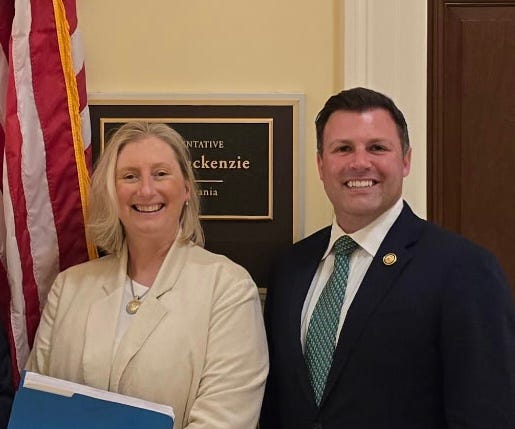
Congressman Mackenzie was among the Republicans swept out of office in the blue tsunami of this month’s midterm elections. He’s a short-timer now on Capitol Hill, and he easily could have chosen to skip this Labor Department event.
It says a great deal about his heart and his character that he was there to support us. When I came down off the stage after my panel, he nodded to indicate I’d done a good job, and he shook my hand as I sat back down in the audience next to him.
I’m so sad that the wave election cost us common-sense lawmakers like Congressman Mackenzie who really do care about this policy problem and were using their power to try and help us fix it.
His incoming successor ran on a platform that includes passing the Protecting the Right to Organize Act. The PRO Act would inject harmful ABC Test regulatory language into federal law, threatening the incomes and careers of independent contractors everywhere.
Serious PRO Act Concerns
The last thing I’ll share about my day behind the scenes at the U.S. Labor Department is that there’s an awful lot of chatter about the PRO Act right now.
Based on what I heard before and after the main event, there is real concern that the PRO Act will not only fly through the U.S. House of Representatives in the new Congress, but that it also may be able to get 60 votes in the U.S. Senate. That would mean President Trump would have to veto the PRO Act to protect the nation’s independent contractors from the kinds of terrible outcomes we have seen with weaponization of the ABC Test in the states.
It also would mean that in 2028, if Democrats keep both chambers of Congress and win the White House, there would be nothing to stop the independent-contractor pathway from being severely narrowed or entirely cut off for entrepreneurial Americans of all kinds.
None of that should be happening in a nation built on the foundational concepts of liberty and the pursuit of happiness. Restricting or completely shutting down an entire pathway to achieve the American Dream shouldn’t even be on the menu for consideration.
I meant what I said on stage at Thursday’s event at the U.S. Labor Department:
“What should be happening is what’s happening here today. The rules should be clear. They should err on the side of giving us all the freedom to work in whatever way works best for us.”
If you agree, then it’s time to start contacting your incoming members of Congress and telling them so.
Maybe, just maybe, we’ll find a few new ones who will follow the strong example that Secretary Sonderling and his team just set, and be willing to listen.